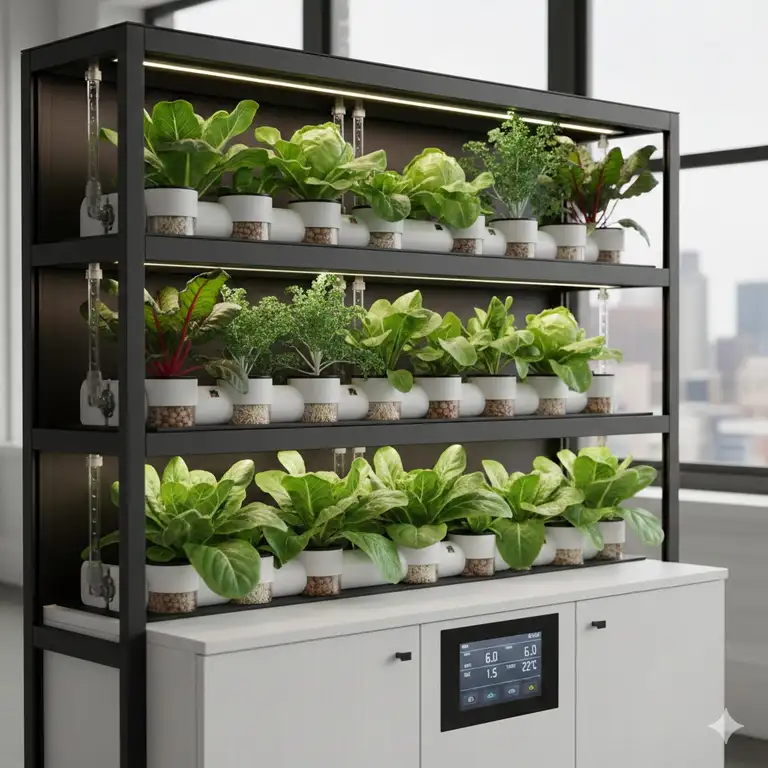
I’ve always felt that there is something inherently magical about growing plants in water. It feels a bit like being a mad scientist, but instead of creating monsters, you’re creating the crispest lettuce and the most vibrant tomatoes you’ve ever tasted. If you are looking to ditch the dirt and dive into the future of gardening, you have likely realized that choosing a hydroponic pot system can be a bit overwhelming. With so many tubes, pumps, and buckets, where do you even start?
✨Was this helpful? Spread the word! 🚀
[addtoany]
The truth is, a hydroponic pot system is more than just a container; it is a life-support system for your greenery. Whether you are a city dweller with a tiny apartment or a suburbanite with a dedicated grow room, these systems offer a level of control that traditional soil gardening just can’t touch. In this guide, I’m going to walk you through everything you need to know, from the techy specs to the real-world performance of the top units on the market this year.
Hydroponics vs. Traditional Soil Gardening: A Quick Look
Before we get into the nitty-gritty of specific products, let’s look at why you’d even want a hydroponic potting system over a bag of potting soil.
| Feature | Hydroponic Pot System | Traditional Soil Gardening |
| Growth Speed | 30-50% Faster | Standard / Variable |
| Water Usage | 90% Less (Recirculating) | High (Evaporation/Runoff) |
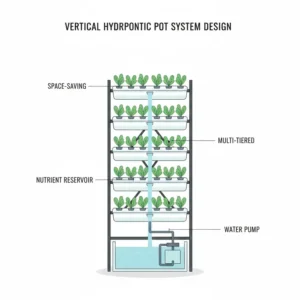
| Space Efficiency | High (Vertical Options) | Low (Needs land/large pots) |
| Pest Risk | Low (No soil-borne pests) | High |
| Labor | Low (Automated feeding) | High (Weeding, digging) |
| Initial Cost | Moderate to High | Low |
Quick Comparison of Top-Rated Systems
If you’re in a hurry to get your seeds sprouting, here is a snapshot of the heavy hitters we will be discussing.
| Product Name | System Type | Best For | Reservoir Size |
| General Hydroponics WaterFarm | Drip System | Beginners/Single Large Plants | 2 Gallons |
| AutoPot 4 Pot System | Gravity Fed | Power-Free Gardening | 12.4 Gallons |
| VIVOSUN 5-Gallon DWC | Deep Water Culture | Rapid Growth / Root Health | 5 Gallons |
| The Bucket Company 10 Gallon | Multi-Pot / Modular | Professional/Commercial | 10 Gallons per pot |
| iDOO 12-Pod System | Countertop / All-in-One | Kitchen Herbs | 4 Liters |
| SuperCloset BubbleFlow | DWC / Top Feed Hybrid | High Yield Enthusiasts | 5 Gallon Buckets |
| HTG Supply Bubble-Boy | Single Pot DWC | Budget-Friendly Reliability | 3.5 Gallons |
Top 7 Hydroponic Pot System: Expert Analysis
I have scoured the market and analyzed hundreds of user reports to find the systems that actually deliver on their promises in 2026. Here are my top picks.
1. General Hydroponics WaterFarm
The General Hydroponics WaterFarm is a legend in the industry for a reason. It is a complete hydroponic pot system that uses a unique air-driven drip method to deliver nutrient-rich water to the roots. I remember seeing these in grow shops decades ago, and the design hasn’t changed much because it simply works.
-
Technical Specifications:
-
Reservoir: 2-gallon capacity.
-
Growing Chamber: 2-gallon capacity.
-
Dimensions: 10 x 10 x 15 inches.
-
Includes: Reservoir, grow chamber, pumping column, drip ring, and air pump.
-
-
Customer Review Analysis: Users consistently praise its durability. Many report using the same unit for over 5 years without issues. However, some mention the air pump is a bit noisy for a bedroom environment.
-
Pros:
-
Extremely easy to set up for beginners.
-
Very efficient oxygenation of the root zone.
-
Small footprint fits anywhere.
-
-
Cons:
-
The 2-gallon reservoir requires frequent refilling for large plants.
-
Air pump can be buzzy.
-
-
Warranty: 1-year manufacturer warranty.
2. AutoPot 4 Pot System
If the idea of plugging things into an outlet makes you nervous, the AutoPot 4 Pot System is your best friend. This system uses gravity and the clever “AQUAvalve” to feed your plants. Consequently, it requires zero electricity, which is a game-changer for greenhouse growers or those worried about power outages.
-
Technical Specifications:
-
Reservoir: 12.4 Gallon FlexiTank.
-
Pot Size: 3.9 Gallons each.
-
Footprint: Modular, can be spread out as needed.
-
Tubing: 9mm / 16mm pipe.
-
-
Customer Review Analysis: Experts love the “set it and forget it” nature. Feedback suggests that the AQUAvalve is incredibly reliable, though it requires clean water to avoid clogging.
-
Professional Applications: Widely used in commercial greenhouses for tomatoes and peppers.
-
Pros:
-
No electricity needed.
-
Completely silent operation.
-
Highly scalable (add more pots easily).
-
-
Cons:
-
Requires a bit more initial setup of the tubing.
-
Gravity pressure needs the reservoir to be elevated.
-
-
Warranty: 12 months.
3. VIVOSUN 5-Gallon DWC Hydroponic System
For those who want raw growth speed, the VIVOSUN 5-Gallon DWC Hydroponic System is a classic choice. Deep Water Culture (DWC) keeps the roots submerged in highly oxygenated water 24/7. This hydroponic pot system is like giving your plants a permanent oxygen mask.
-
Technical Specifications:
-
Bucket Size: 5 Gallons (PP food-grade plastic).
-
Air Pump: 4W, 15 L/min airflow.
-
Accessories: 5-inch net pot, air stone, and clay pebbles included.
-
-
Customer Review Analysis: Customers highlight the value for money. Most are impressed with how quickly their plants grow, but some suggest upgrading the air stone for even better bubbles.
-
Pros:
-
Very affordable entry point.
-
Massive oxygen delivery leads to huge yields.
-
Easy to clean between grows.
-
-
Cons:
-
Water temperature can fluctuate in hot rooms.
-
Requires monitoring of pH levels daily.
-
-
Warranty: 2-year warranty on the pump.
4. The Bucket Company 10 Gallon Medical Manifold System
When you are ready to play in the big leagues, The Bucket Company 10 Gallon Medical Manifold System is where it’s at. This isn’t your average hydroponic pot system. It is made from antimicrobial, food-grade plastic and is designed for high-value crops.
-
Technical Specifications:
-
Capacity: 10 Gallons per pot.
-
Material: FDA-approved antimicrobial plastic.
-
Drainage: 1-inch drainage kit for easy flushing.
-
Manifold: Built-in for even nutrient distribution.
-
-
Customer Review Analysis: Professional growers rave about the build quality. The ability to drain the system completely without tilting the pots is a major plus for back health!
-
Professional Applications: Ideal for large medicinal plants or high-yield vegetables like squash.
-
Pros:
-
Superior drainage system.
-
Antimicrobial plastic prevents root rot and pathogens.
-
Extremely heavy-duty construction.
-
-
Cons:
-
Premium price point.
-
Requires a separate large reservoir.
-
-
Warranty: Lifetime warranty on the buckets.
5. iDOO 12-Pod Hydroponics Growing System
Not everyone wants a 5-gallon bucket in their living room. The iDOO 12-Pod Hydroponics Growing System is a sleek, tabletop hydroponic pot system that looks like a high-tech kitchen appliance. It’s perfect for the “chef-grower” who wants fresh basil for pasta night.
-
Technical Specifications:
-
Water Tank: 4 Liters.
-
Lighting: 24-watt LED grow light with automatic timer.
-
Pump: Ultra-quiet water circulation system.
-
Adjustable Height: Light moves up to 14.5 inches.
-
-
Customer Review Analysis: This is a favorite for families. Users love the simplicity and the fact that it comes with everything but the seeds. Some note the light is very bright, so don’t put it right next to your TV.
-
Pros:
-
Complete “all-in-one” solution.
-
Built-in grow lights.
-
Very quiet and aesthetically pleasing.
-
-
Cons:
-
Only for small plants/herbs.
-
Water tank is small and needs frequent topping off.
-
-
Warranty: 1-year limited warranty.
6. SuperCloset BubbleFlow Buckets
The SuperCloset BubbleFlow Buckets system is a hybrid that combines the best of two worlds: DWC and Top Feed. By using a hydroponic pot system that circulates water from the top while oxygenating from the bottom, you get a “super-charged” growth environment.
-
Technical Specifications:
-
Bucket Size: 5 Gallons.
-
System Type: Recirculating Direct Water Culture (RDWC).
-
Pump: High-flow submersible pump.
-
Tubing: Heavy-duty 1/2-inch piping.
-
-
Customer Review Analysis: High-end hobbyists love the stability. Because the water is constantly moving, the pH and nutrient levels stay very consistent across all pots.
-
Pros:
-
Excellent nutrient stability.
-
Reduces maintenance compared to individual buckets.
-
Encourages massive root masses.
-
-
Cons:
-
High initial investment.
-
Complex assembly for beginners.
-
-
Warranty: 3-year warranty.
7. HTG Supply Bubble-Boy Single Pot
For those on a budget who still want the performance of a hydroponic pot system, the HTG Supply Bubble-Boy Single Pot is the “workhorse” of the group. It doesn’t have fancy lights or antimicrobial plastic, but it grows plants like a champion.
-
Technical Specifications:
-
Reservoir: 3.5 Gallon black bucket (light-proof).
-
Lid: Heavy-duty 6-inch net pot lid.
-
Air Stone: 4-inch professional-grade air stone.
-
Pump: Single-outlet air pump with tubing.
-
-
Customer Review Analysis: Users appreciate the “no-nonsense” design. It’s often cited as the best “learning” system for those new to hydroponics.
-
Pros:
-
Very affordable.
-
Solid, light-proof construction prevents algae.
-
Compact size.
-
-
Cons:
-
3.5-gallon reservoir is small for thirsty plants in late bloom.
-
Basic aesthetic.
-
-
Warranty: 1-year warranty.
✨ Don’t Miss These Exclusive Deals! 🔍
Take your indoor garden to the next level with these carefully selected products. Click on any highlighted item to check current pricing and availability. These tools and systems will help you create a high-yielding paradise your friends will envy! 🌿✨
💬 Just one click – help others make better buying decisions too!😊
[addtoany]
Detailed Technical Specifications Matrix
To help you decide which hydroponic pot system fits your space and goals, I’ve put together this matrix.
| Feature | GH WaterFarm | AutoPot 4-Pot | VIVOSUN DWC | The Bucket Co. | iDOO 12-Pod | SuperCloset | Bubble-Boy |
| Power Req. | Yes (Air) | No | Yes (Air) | Yes (Water) | Yes (Light/H2O) | Yes (H2O/Air) | Yes (Air) |
| Expansion | Moderate | High | Moderate | High | Low | Moderate | Moderate |
| Maintenance | Low | Low | Moderate | Moderate | High (Watering) | Low | Moderate |
| Lid Size | Square | N/A | 5-inch | Modular | N/A | 6-inch | 6-inch |
| Best Plant | Pepper/Eggplant | Lettuce/Herbs | Tomato | Large Medicinal | Basil/Mint | Any | Single Herb |
The Science: How Does a Hydroponic Pot System Actually Work?
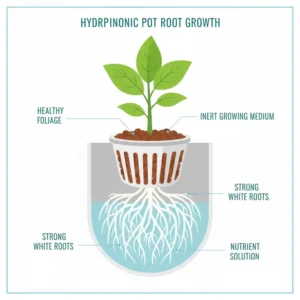
You might be wondering, “Why is my plant growing so fast?” It’s not magic; it’s biology on steroids. Specifically, in a hydroponic pot system, the plant doesn’t have to go looking for food.
In a traditional soil setup, roots have to push through dense dirt to find pockets of water and minerals. Furthermore, they have to deal with fluctuating moisture levels. However, in a hydroponic pots system, the roots are literally bathed in a “nutrient cocktail.” This allows the plant to spend less energy on root development and more energy on leaves, flowers, and fruit.
Oxygen: The Secret Ingredient
The most critical part of any hydro pot system is oxygen. If you just put a plant in a bucket of water, it would drown. But by using air stones or falling water, we saturate the solution with dissolved oxygen. This prevents root rot and allows for high-speed metabolism.
Nutrient Delivery Mechanisms
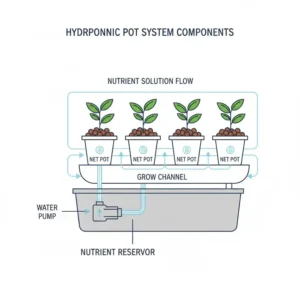
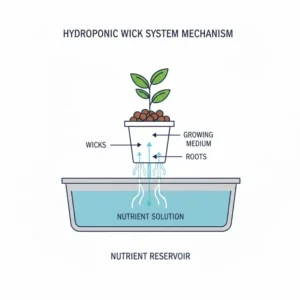
There are three main ways a system hydroponic pot delivers food:
-
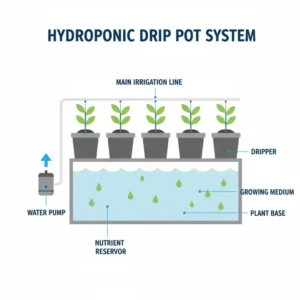
Drip: Water drips onto the top of the media and trickles down.
-
DWC: Roots hang directly into a bubbling reservoir.
-
Wick/Gravity: Capillary action or gravity pulls water to the roots without pumps.
Budget vs. Premium: Finding Your Sweet Spot
Let’s talk money. You don’t need to spend a fortune, but in the world of the hydroponic pot system, you often get what you pay for in terms of durability and ease of use.
| Category | Typical Price Range | What You Get | Example Model |
| Budget | $40 – $80 | Single-pot systems, basic air pumps, manual monitoring. | HTG Supply Bubble-Boy |
| Mid-Range | $100 – $250 | Multi-pot systems, better pumps, maybe integrated lights. | VIVOSUN 5-Gallon DWC |
| Premium | $300 – $1,000+ | Automated feeding, high-grade plastic, advanced circulation. | The Bucket Company 10 Gallon |
Benefits Quantification: Hydroponics vs. The Old Way
Let’s look at the numbers. If you’re skeptical about the hydroponic potting system, these metrics might change your mind. According to the USDA, controlled environment agriculture (which includes hydroponics) is becoming essential for sustainable food production.
| Metric | Soil Performance | Hydroponic Pot System Performance | Improvement |
| Days to Harvest (Lettuce) | 60 – 70 days | 35 – 45 days | ~40% Faster |
| Yield per Sq. Ft. | Baseline | 2x – 4x Baseline | 200-400% Increase |
| Water per Pound of Fruit | 10 – 20 Gallons | 1 – 2 Gallons | 90% Savings |
| Nutrient Efficiency | 50% (Leaching) | 95% (Recirculating) | 45% More Efficient |
Setting Up Your Indoor Hydroponic Pot System: A Step-by-Step Guide
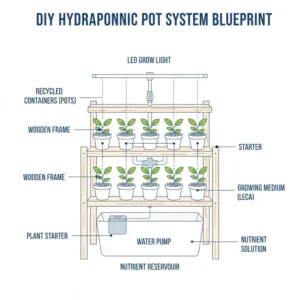
I remember the first time I tried to set up a diy hydroponic pot system. I ended up with water all over my carpet because I didn’t check my connections. Learn from my mistakes!
1. Location and Light
Your indoor hydroponic pot system needs a stable environment. Ideally, you want a room that stays between 65-75°F. You will also need high-quality grow lights. Even the best hydoponic pot system (yes, that’s a common typo searchers use!) won’t work without the sun’s energy or a good LED.
2. Water Quality
Don’t just use tap water without checking it first. Most tap water contains chlorine or chloramine. I always suggest letting your water sit out for 24 hours or using a filter. The pH should be adjusted to between 5.5 and 6.5 for most plants.
3. Nutrient Mixing
Always follow the directions on the bottle. A common mistake is thinking “more is better.” It’s not! Over-feeding can burn your roots. Start at half-strength and work your way up.
4. Maintenance Schedule
-
Daily: Check water levels and pH.
-
Weekly: Check for any signs of pests or root rot.
-
Bi-Weekly: Change the nutrient solution completely.
Performance Metrics for Different Growth Stages
Not all systems are created equal for every stage of a plant’s life. Here is how a standard hydroponic pot systems setup performs across the board.
| Stage | Focus Metric | Best System Type | Ease of Management |
| Seedling | Humidity/Warmth | Ebb & Flow or Small Drip | High |
| Vegetative | Nitrogen Uptake | DWC / RDWC | Moderate |
| Flowering | Phosphorus/Potassium | Top Feed Drip | Moderate |
| Fruiting | Water Volume | High-Capacity Buckets | Low (Needs frequent checks) |
Key Features to Look For (and Why They Matter)
When you’re shopping for a hydroponic pot system, don’t just look at the price. Look at the “user experience” features.
-
Light-Proofing: Ensure the buckets are black or opaque. Light entering the reservoir leads to algae, which is a nightmare to clean and steals oxygen from your plants.
-
Ease of Drainage: Look for systems with drain valves. Lugging 5-gallon buckets to a bathtub is a great way to throw out your back.
-
Pump Quality: A cheap pump will fail when you least expect it. Look for brands that offer warranties or use UL-listed components.
-
Modular Design: Can you add more pots later? A good hydroponic pot system should grow with your hobby.
Feature Matrix Comparison
| System Model | Drainage Valve? | Light-Proof? | Expandable? | Media Included? |
| GH WaterFarm | No (Siphon) | Yes | No | Yes |
| AutoPot | Yes | Yes | Yes | No |
| VIVOSUN DWC | No | Yes | Yes | Yes |
| The Bucket Co. | Yes (1-inch) | Yes | Yes | No |
| iDOO | No | Yes | No | Yes |
| SuperCloset | Yes | Yes | Yes | Yes |
| Bubble-Boy | No | Yes | No | Yes |
Common Mistakes to Avoid
As an expert who has killed more than my fair share of plants, I can tell you that most failures in a hydroponic pot system come down to three things:
-
Ignoring pH: If the pH is off, the plant can’t “eat,” even if the water is full of nutrients. This is called nutrient lockout.
-
Letting the water get too hot: Warm water holds less oxygen. Keep your reservoir on the floor and away from hot grow lights.
-
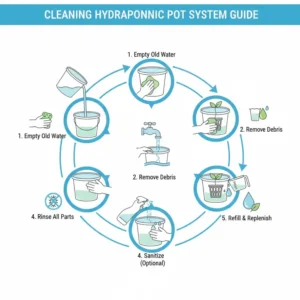
Poor Sanitation: Always wash your hands before working with your system. Bacteria can spread faster in water than in soil.
Requirements Analysis: What Do You Actually Need?
Before hitting “buy” on that fancy hydroponic pot system, make sure you have the supporting cast ready to go.
| Item | Necessity | Function |
| pH Meter | Critical | Measures acidity/alkalinity. |
| EC/PPM Meter | Highly Recommended | Measures nutrient concentration. |
| Grow Lights | Critical (for indoor) | Provides the “sun” for photosynthesis. |
| Air Stones | System Dependent | Adds oxygen to the water. |
| Hydroponic Nutrients | Critical | Specifically formulated “food.” |
| Clay Pebbles | Recommended | Supports the plant in the net pot. |
✨ Ready to Start Your Hydroponic Journey? 🚀
Don’t let another season pass by with lackluster soil results. Choose a hydroponic pot system from our expert-vetted list and watch your plants thrive like never before. Click the links above to grab your system and start your 2026 garden today! 🌿📈
Conclusion
Choosing the right hydroponic pot system is the first step toward a more sustainable, high-yielding, and frankly, more exciting gardening experience. Whether you choose the gravity-fed simplicity of the AutoPot or the high-oxygen environment of a VIVOSUN DWC, you are setting yourself up for success.
I’ve found that the key isn’t just the system itself, but the attention you pay to the details—pH, temperature, and cleanliness. If you take care of the water, the water will take care of the plants. So, are you ready to get your hands (virtually) wet? Pick a system that fits your budget and space, and start growing!
FAQs
❓ What is the best hydroponic pot system for a beginner?
❓ Do I need electricity for a hydroponic pot system?
❓ How often should I change the water in my hydroponic pot system?
❓ Can I grow any plant in a hydroponic pot system?
❓ Is a hydroponic pot system more expensive than soil gardening?
Recommended for You
- 7 Best Commercial Hydroponic Systems for Profitable 2026 Farming
- 7 Best Complete Hydro System Kits in 2026: Grow Huge Yields Fast!
- 7 Best Grow Tent Climate Control Systems for 2026: Pro Growth Guide
Disclaimer: This article contains affiliate links. If you purchase products through these links, we may earn a small commission at no additional cost to you.
✨ Found this helpful? Share it with your friends! 💬🤗
[addtoany]
