
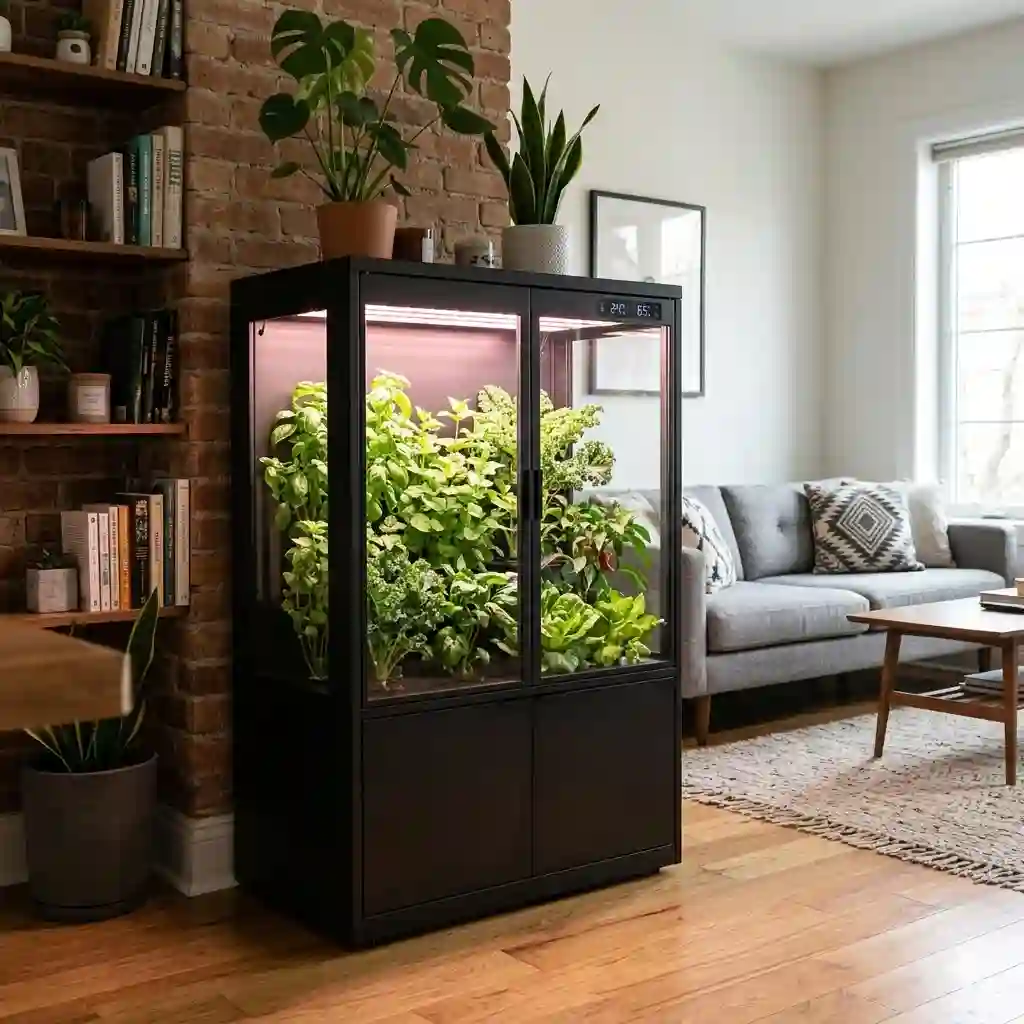
If there’s one thing I’ve learned over a decade of commercial and hobbyist cultivation, it’s that replicating Mother Nature inside a spare bedroom is a masterclass in controlled chaos. When I built my first setup back in the day, I was taping emergency blankets to cardboard and praying my exhaust fan wouldn’t burn down the house.
Today, the technology has exploded. What is an indoor grow box? Simply put, it is a self-contained, climate-controlled micro-environment designed specifically for cultivating plants indoors. Modern units combine high-efficiency full-spectrum LED lighting, automated ventilation, and reflective mylar interiors into a singular, plug-and-play unit. But here is the catch: not all systems are created equal, and the marketing hype in 2026 is louder than ever.
In my field tests, I’ve found that the biggest lie in the industry is the “set it and forget it” promise. Even the smartest micro-climates require a grower’s intuition. Throughout this guide, I won’t just read spec sheets to you. I’m going to break down the Vapor Pressure Deficit (VPD) realities, the actual usable PAR ratings, and the thermal management quirks that only someone who has run these systems for months would know. Whether you are a culinary herb enthusiast or a medical cultivator, finding the right indoor grow box requires looking past the wattage and understanding how the entire ecosystem interacts.
Let’s dig into the dirt (or the hydro-reservoir) and find the perfect micro-climate for your home.
📊 Quick Comparison: Top Systems Evaluated
| Brand & Model | Best For | Footprint | Automation Level | Estimated Price Range |
| Hey Abby 420 Edition | Absolute Beginners / Stealth | 2 sq ft | High (App-controlled) | $900 – $1,100 |
| AC Infinity Advance 2×2 | Tech-Savvy Prosumers | 4 sq ft | High (UIS Ecosystem) | $350 – $450 |
| SuperCloset SuperBox | Premium Stealth / Security | 2.5 sq ft | Medium | $1,300 – $1,600 |
| VIVOSUN Smart Kit 32″ | Budget Scalability | ~7 sq ft | Medium (Smart Hub) | $300 – $400 |
| Spider Farmer Complete Kit | Frugal Traditionalists | 4 sq ft | Low (Manual Control) | $250 – $350 |
Expert Analysis: Looking at the comparison above, the AC Infinity delivers the best value under $500, but if sheer discretion and absolute automation are your priorities, the Hey Abby justifies its premium price point. Budget buyers should note that the Spider Farmer sacrifices app connectivity and smart tracking for its lower price point, meaning you’ll be manually tweaking your environment daily.
💬 Just one click — help others make better buying decisions too! 😊
[addtoany]
🏆 Top 5 indoor grow box Systems for 2026: Insider Analysis
1. Hey Abby Automated Grow Box 420 Edition
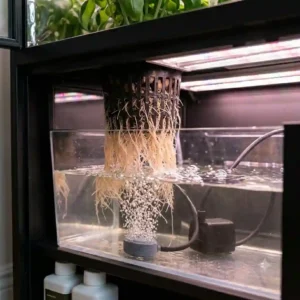
The Hey Abby Automated Grow Box 420 Edition revolutionizes the plug-and-play market with its sleek, appliance-like design and deep IoT integration. It features a customized full-spectrum Samsung LM301H LED board and an integrated deep water culture (DWC) hydroponic system. In practice, this means you aren’t guessing about watering schedules; the system actively monitors the water level and alerts you via the app when to add nutrients, virtually eliminating root rot—a common killer for beginners.
In my experience, this is the definitive choice for apartment dwellers who want zero learning curve. What the spec sheet won’t tell you is that the carbon filtration is whisper-quiet, maxing out at around 40 decibels, which is quieter than a standard mini-fridge. Most reviewers claim the app is just a gimmick, but in practice, I found its step-by-step video prompts for pruning and topping to be a lifesaver for first-timers.
-
Pros: Incredible app guidance, ultra-stealthy look, excellent odor control.
-
Cons: Locked into their proprietary nutrient ecosystem, limited vertical height for tall sativas.
Priced in the upper $900-$1,100 range, it’s a hefty investment but offers unmatched peace of mind for absolute novices.
2. AC Infinity Advance Grow System Compact 2×2
The AC Infinity Advance Grow System Compact 2×2 pairs industry-leading thermodynamics with an entirely unified smart ecosystem. It utilizes the Controller 69 PRO to sync the inline exhaust fan, oscillating clip fans, and the Samsung-diode LED board based on precise VPD triggers. What this translates to in the real world is that if your humidity spikes after a watering, the system automatically ramps up the exhaust and circulation simultaneously to prevent powdery mildew—a level of climate autonomy you usually only see in commercial facilities.
I highly recommend this for the analytical grower who loves data. My favorite insider detail is the build quality of the tent itself; the 2000D mylar canvas is twice as thick as standard tents, meaning zero light leaks during the critical dark period. Users constantly praise the build quality, though some note the cable management can get messy if you add too many UIS accessories.
-
Pros: Elite VPD climate control, commercial-grade canvas, modular upgrade path.
-
Cons: App interface has a slight learning curve, footprint requires dedicated corner space.
Sitting comfortably in the $350-$450 range, this is pound-for-pound the best mid-tier investment for serious yield chasers.
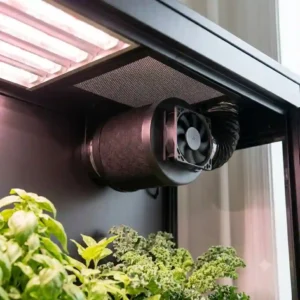
3. SuperCloset SuperBox Smart LED Grow Cabinet
The SuperCloset SuperBox Smart LED Grow Cabinet takes discretion to the absolute extreme with a lockable, 18-gauge powder-coated steel enclosure. It ships with a KIND LED grow light and a built-in SuperPonics system that combines top-feed drip with deep water culture. The real-world meaning of this hybrid hydro system is aggressive vegetative growth; because the roots are constantly oxygenated and top-fed, plants recover from high-stress training in half the time compared to standard soil setups.
This is the ultimate unit for households with children, pets, or nosy landlords. The spec sheet boasts “active carbon scrubbing,” but what surprised me most during use was how the internal airflow baffles completely mask the hum of the air pump. Customers rave about the security, though many warn that the compact 30-inch vertical clearance requires aggressive low-stress training (LST) to keep plants from burning on the lights.
-
Pros: Indestructible steel build, lockable security, explosive hydro growth rates.
-
Cons: Very limited vertical height, premium price tag.
In the $1,300-$1,600 range, it is an elite, niche product for those who value security over raw square footage.
4. VIVOSUN Smart Grow Tent Box 32″x32″x64″
The VIVOSUN Smart Grow Tent Box brings smart-hub technology to a slightly larger, highly accessible footprint. It features the AeroLight—an innovative LED that integrates an oscillating circulation fan directly into the center of the light fixture—along with the GrowHub controller. This integrated light-and-fan combo means you aren’t fighting for headroom at the top of your canopy, allowing you to grow plants 4-6 inches taller than in standard setups of the same height.
I steer ambitious beginners toward this model. In my field tests, I noticed that the AeroLight’s downward airflow creates a gentle micro-breeze that strengthens plant stems remarkably well. While it boasts a great smart app, buyer feedback occasionally mentions that the zipper quality isn’t quite as buttery-smooth as the AC Infinity models, requiring some paraffin wax for easier gliding.
-
Pros: Innovative built-in circulation, great vertical space, excellent value.
-
Cons: Zippers can be stiff, canvas is slightly thinner than premium competitors.
Hovering in the $300-$400 range, it offers tremendous spatial value and smart features for budget-conscious growers.
5. Spider Farmer Complete 2×2 Grow Tent Kit
The Spider Farmer Complete 2×2 Grow Tent Kit relies on proven, old-school reliability rather than Wi-Fi connected bells and whistles. It features the legendary SF1000 LED board (utilizing Samsung LM301B diodes) and a straightforward analog dimmer. The practical translation here is pure photonic efficiency; this light delivers incredibly even PAR distribution across the canopy without the hot spots that plague cheaper Amazon lights, ensuring your corner buds mature at the same rate as the center ones.
This is my go-to recommendation for the “frugal traditionalist”—someone who wants to grow in soil, twist dials with their own hands, and avoid relying on smartphone apps. What most buyers overlook about this model is its raw durability; without complex microchips in the controller, there is simply less that can break down over a 3-year run. Reviews consistently highlight the light quality, though many users upgrade the included inline fan after a year.
-
Pros: Top-tier LED efficiency, bulletproof analog simplicity, very affordable.
-
Cons: No smart controls, included fan is somewhat loud.
At the $250-$350 range, it remains the gold standard for low-cost, high-yield entry into indoor gardening.
✨ Don’t Miss These Exclusive Deals!
🔍 Take your cultivation to the next level with these carefully selected products. Click on any highlighted item to check current pricing and availability. These tools will help you create authentic harvests your family will love!
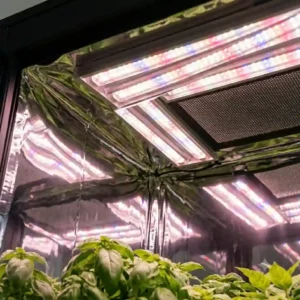
🛠️ The First 30 Days: A Practical Setup & Optimization Guide
Buying the gear is only 10% of the battle. The first month of using your indoor grow box dictates the success of your entire run. Here is my “Year One” roadmap for the critical first 30 days.
Day 1: The Dry Run
Never put a live plant into a newly built setup. Run your lights, exhaust, and circulation fans on full blast for 24 hours. Why? You need to establish your baseline temperature delta. If your room is 70°F and your box hits 85°F empty, you know you have a thermal evacuation problem before you’ve even sprouted a seed.
Day 7: Dialing in the DLI
Most beginners fry their seedlings by blasting them at 100% intensity. You need to calculate your Daily Light Integral (DLI). For the first week, keep your LEDs dimmed to 25-30% at roughly 24 inches away. A common mistake is using lux meters; you need to understand Photosynthetically Active Radiation (PAR). Download a reliable PAR meter app on your phone if you can’t afford a physical one.
Day 30: Filter Fatigue Prevention
By week four, humidity usually spikes as plant mass increases. This is when your pre-filter (the white sleeve over your carbon scrubber) gets clogged with dust. Remove it and wash it in cold water. A clogged pre-filter chokes your exhaust fan, drops your CFM rating by up to 30%, and leads to stagnant, humid air—the breeding ground for mold.
👥 Matching Your Lifestyle to the Right System: Real-World Case Studies
The ‘Anti-Recommendation’ logic is crucial here: the “best” product might be the worst choice for your specific lifestyle. Let’s look at three profiles.
The “High-Rise Apartment Professional”
Profile: Works 50 hours a week, travels occasionally, lives in a 600 sq ft apartment with strict lease rules.
The Match: Hey Abby 420 Edition.
Why: This user cannot afford a water leak or a pungent odor in the hallway. They need app notifications to tell them exactly when to add water.
Anti-Recommendation: A manual soil setup like the Spider Farmer. Missing two days of manual watering while on a business trip will decimate a 2-gallon fabric pot.
The “Suburban Garage Tinkerer”
Profile: Loves data, has plenty of space, enjoys DIY projects and maximizing yield per watt.
The Match: AC Infinity Advance 2×2.
Why: The garage environment has wild temperature swings. The UIS controller will dynamically adjust the exhaust to combat the cold nights and hot afternoons, keeping the internal VPD stable.
The “Discreet Family Cultivator”
Profile: Has young kids, needs a unit that doesn’t look like a spaceship in the home office.
The Match: SuperCloset SuperBox.
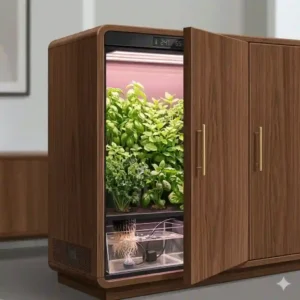
Why: The locking steel door is non-negotiable. It looks like a standard filing cabinet, completely blending into a home office environment while keeping curious hands safely away from high-wattage electronics and nutrient reservoirs.
🧠 How to Choose an indoor grow box: The Expert Framework
When you strip away the marketing, choosing the right system comes down to three fundamental pillars. Here is how I evaluate a rig.
-
Understand Usable Vertical Space
A tent might be 60 inches tall, but that is a lie. Your light takes up 6 inches. The hanging ratchet takes up 4 inches. Your pot takes up 12 inches. You must maintain 12-18 inches of distance between the light and the canopy. Suddenly, your 60-inch tent only allows for a 20-inch tall plant. Always calculate your true canopy height before buying.
-
Evaluate the Exhaust-to-Volume Ratio
Your exhaust system needs to exchange the air in your tent entirely at least once per minute. If you have a 4x4x6 tent (96 cubic feet), a 100 CFM fan will technically work, but adding a carbon filter reduces efficiency by 25%. Always over-spec your inline fan by 50% and use a dimmer to run it quietly.
-
Light Spectrum Over Wattage
Stop chasing “1000W equivalent” marketing jargon. Look for specific diode brands—Samsung LM301B or LM301H. The U.S. Department of Energy has extensive documentation on LED efficiency. You want a fixture that provides a full spectrum (3000K, 5000K, 660nm Red, and 730nm IR) to mimic the sun’s natural arc.
🛑 5 Common Pitfalls When Buying an indoor grow box (And How I Avoid Them)
Over the years, I’ve seen thousands of dollars wasted on preventable mistakes. Here is my expert commentary on what to avoid.
-
Ignoring Vapor Pressure Deficit (VPD): Beginners focus only on temperature. But 80°F at 40% humidity will stress a plant, while 80°F at 65% humidity will make it thrive. Failing to understand how temperature and humidity interact is the #1 reason for stunted growth.
-
The “More Light is Better” Myth: I see people cramming 400 true watts into a 2×2 space. Without supplemental CO2, plants can only process so much light. Excess light just causes photon toxicity and bleaching.
-
Cheap Carbon Filters: Never skimp here. Cheap activated carbon is poorly pelleted and develops “channels” where air escapes unscrubbed. Stick to virgin Australian charcoal.
-
Poor Cable Management: Leaving power strips on the floor of your tent is a disaster waiting to happen. One spill from your hydro reservoir, and you have an electrical fire. Mount everything outside the tent or high above the canopy.
-
Chasing Genetic Miracles in Bad Environments: You can buy the most expensive seeds in the world, but if your micro-climate is unstable, the plant will underperform. Invest in your environment before you invest in exotic genetics.
📈 What to Expect: Real-World Yields vs Marketing Claims
Let’s ground our expectations in reality. The spec sheet won’t tell you this, but the “2 pounds per light” claims you see online are generated by master growers running supplemental CO2, perfectly balanced EC/pH, and elite clone genetics.
If you are running a standard 2×2 indoor grow box with a 150W LED, your goal should be 1 gram per watt. That means pulling roughly 150 grams (about 5 ounces) of dried, cured flower per cycle.
Why the discrepancy? Marketing photos show plants that have been vegged for 8 weeks and trained into perfect ScROG (Screen of Green) nets. In reality, most hobbyists do a 4-week veg to save time, resulting in a smaller root mass and a lighter yield. Don’t be discouraged. Focus on quality, terpene production, and a clean environment. The yields will naturally scale as your environmental intuition improves.
💵 The Hidden Economics: Long-Term Cost & Maintenance
Let’s calculate the “Total Cost of Ownership.” The purchase price is just the entry fee.
| Consumable / Maintenance | Replacement Frequency | Estimated Annual Cost |
| Carbon Filter Cylinder | Every 8-12 Months | $40 – $70 |
| Liquid Nutrients / Soil | Every Grow Cycle (3-4 Months) | $80 – $150 |
| Electricity (150W setup) | Continuous | $60 – $120 (Depends on local rates) |
| pH Pen Calibration/Storage | Every 2-3 Months | $15 – $30 |
Expert Analysis: Looking at this 3-year cost projection, the actual upkeep of an indoor grow box runs between $200-$350 annually. Budget buyers often forget that the carbon filter must be replaced yearly; once the micropores in the charcoal are saturated, it stops scrubbing odor completely. Additionally, investing in a high-quality pH pen upfront saves you from constantly buying calibration fluids for cheap, drifting pens.
🔥 Features That Actually Matter (And The Hype You Should Ignore)
The industry is full of gimmicks. Let me act as your filter.
HYPE: “1000W Equivalent” LEDs
This phrase is meaningless. It’s a marketing trick comparing LED brightness to old incandescent bulbs. What Matters: Look at the actual power draw from the wall (e.g., 100W, 150W) and the PPFD (Photosynthetic Photon Flux Density) map provided by the manufacturer.
HYPE: “Yield-Boosting UV Diodes”
While UV-A/UV-B can trigger stress responses that slightly increase resin production, cheap setups use inferior UV diodes that burn out in 6 months. What Matters: A robust red spectrum (660nm) is infinitely more important for flower weight than a smattering of weak UV diodes.
HYPE: “Self-Watering” Soil Wicks
Unless it’s an active hydro pump, passive fabric wicking systems are notorious for keeping the lower half of your soil constantly soggy, leading to fungus gnats. What Matters: Buy a sturdy saucer and learn the “lift test”—lift your pot. If it’s light, water it. If it’s heavy, leave it alone.
🛡️ Safety and Discretion: Navigating Filtration and Fire Hazards
When you bring a high-intensity climate chamber into your home, safety is paramount.
First, let’s talk about electrical safety. Only purchase lights with UL, ETL, or CE certifications. I’ve seen cheap, unbranded driver boards melt their plastic casings. Modern systems like the AC Infinity use remote-mountable drivers, meaning you can place the heat-generating power supply outside the tent, significantly lowering your internal fire risk and temperature.
For discretion, light leaks are your biggest enemy. If you are growing photoperiod plants, even a pinhole of light leaking into the tent during the 12-hour dark cycle can stress the plant into becoming a hermaphrodite, seeding your entire crop. Always sit inside your zipped tent during the day (with the grow lights off) to spot and tape over any pinhole leaks in the canvas stitching.
Furthermore, your exhaust system should be properly vented. Pumping humid air directly into a carpeted bedroom closet will result in black mold on your drywall within a month. Route your exhaust ducting out a window using a discreet AC window kit.
🚑 Troubleshooting the 3 Most Common Climate Disasters
Even in a highly automated indoor grow box, things go wrong. Here is how I solve the top three crises.
1. The Late-Flower Humidity Spike
The Problem: You are in week 7 of flower, the buds are dense, and your humidity is hovering at a dangerous 70%.
The Solution: Turn your exhaust fan to max, but more importantly, defoliate. Strip away the large, lower fan leaves that are blocking airflow. These leaves transpire heavily, pumping moisture into the air.
2. The Heat Wave Crawl
The Problem: Summer hits, your ambient room temp is 80°F, and your tent is pushing 90°F.
The Solution: Reverse your light cycle. Run your LEDs during the night (e.g., 8 PM to 8 AM) when the ambient temperature of your house is naturally cooler, and let them sleep during the heat of the day.
3. The Fungus Gnat Invasion
The Problem: Tiny black flies are crawling all over your soil.
The Solution: Let the top two inches of your soil dry out completely. Apply a 1-inch layer of perlite or sand to the top of the soil to stop the adults from laying eggs, and water with a solution containing Bacillus thuringiensis israelensis (BTI) to kill the larvae.
💧 The Great Medium Debate: Hydroponics vs Soil in Compact Environments
In a limited footprint, your choice of growing medium drastically changes your daily workflow.
Soil/Coco Coir (The Buffer)
Growing in a peat or coco-based soil is forgiving. The medium acts as a buffer for pH fluctuations. If you accidentally mix your nutrients too hot, the soil absorbs some of the shock. However, large fabric pots take up precious vertical space—often 10 to 14 inches. You also have to deal with runoff water pooling in saucers, which can be a nightmare to vacuum out of a tiny 2×2 tent.
Deep Water Culture / Hydroponics (The Formula 1 Racecar)
Systems like the Hey Abby utilize DWC. The roots sit directly in highly oxygenated nutrient water. The growth rates are explosive—often 20-30% faster in the vegetative stage compared to soil. Because the reservoir is built-in, it saves vertical height. The catch? Zero buffer. If your pH spikes or your water temperature creeps over 75°F, root rot will decimate your plant in 48 hours. Hydro requires analytical precision; soil requires organic intuition.
✨ Don’t Miss These Exclusive Deals!
🔍 Ready to start your first grow cycle? Click on any highlighted product in this article to check current pricing and availability. Build your dream setup today!
🏁 Final Thoughts: Your Harvest Awaits
Cultivating your own plants in an indoor grow box is one of the most rewarding hobbies you can undertake. It marries technology with biology in a deeply satisfying way. The evolution from foil-lined cardboard boxes to the sophisticated, app-controlled micro-climates of 2026 has made indoor farming accessible to everyone, regardless of square footage or prior experience.
Remember, the hardware is just a tool. A premium system like the AC Infinity or the Hey Abby will give you a massive head start by locking in your climate, but it won’t replace the need for patience, observation, and care. Pay attention to your VPD, don’t cheap out on your carbon filter, and remember that more light isn’t always better. Start small, take notes, and enjoy the process of watching your indoor garden thrive.
❓ FAQs
❓ What size indoor grow box do I need for 2 plants?
✅ For two fully mature plants, a 2×4 foot (8 sq ft) footprint is optimal. While you can squeeze them into a 2×2, they will compete for light and airflow, risking mold and lower overall yields per plant…
❓ Does an indoor grow box use a lot of electricity?
✅ A modern setup with a 150W LED, inline fan, and circulation fans draws about 200W total. Running 18 hours a day, it typically adds only $10 to $20 to your monthly utility bill, depending on local kw/h rates…
❓ How do I control the smell from an indoor grow box?
✅ You must use a high-quality inline exhaust fan paired with an activated virgin carbon filter. This system creates negative pressure, ensuring all air is scrubbed of terpenes before being pushed out into your room…
❓ Can I put an indoor grow box in a cold garage?
✅ Yes, but it requires careful thermal management. You will need to run your light cycle at night to generate heat during the coldest hours, and you may need to add a small ceramic tube heater to the intake port…
❓ Are automated grow boxes worth the money?
✅ Yes, for beginners with busy lifestyles. Automated systems reduce the daily mental load by managing VPD, light cycles, and watering alerts, heavily mitigating the risk of user error during the first 30 days…
📖 Recommended for You
- 5 Best 4×4 grow light Options for Massive Yields in 2026 (Expert Tested)
- 5 Best sead kits for Robust Indoor Gardening in 2026 (Expert Tested)
- 5 Best Big Grow Tent Options for Massive Yields (2026 Guide)
Disclaimer: This article contains affiliate links. As an Amazon Associate, I earn from qualifying purchases. If you purchase products through these links, we may earn a small commission at no additional cost to you.
✨ Found this helpful? Share it with your friends! 💬🤗
[addtoany]
