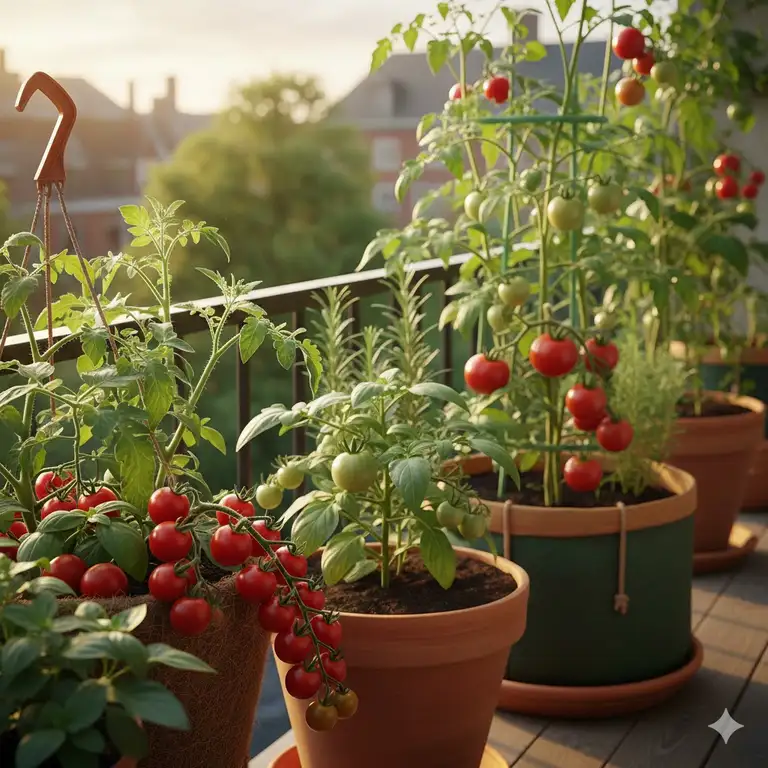
There is nothing quite like biting into a sun-warmed, perfectly ripe tomato that you grew yourself. Honestly, if you haven’t experienced that, you’re missing out! For many of us, though, a large backyard plot is just a dream. This is where the magic of growing in containers comes in. It’s a brilliant way to enjoy a huge harvest, even if your garden is just a sunny balcony or a small patio. But you can’t just throw any seed in a pot and expect great results. Choosing the right variety is the critical difference between a lush, productive plant and a spindly, frustrating failure.
✨Was this helpful? Spread the word! 🚀
[addtoany]
Getting the best tomatoes for container growing requires a keen understanding of plant habit, root structure, and the specific needs of these compact varieties. We’re not aiming for the massive, sprawling plants your grandpa grew in his field; we need tough, high-yield varieties that thrive in confined spaces. I’ve spent years testing countless tomato types in everything from 5-gallon buckets to stylish ceramic planters, and I’m ready to share the ultimate secrets and the top varieties with you. This comprehensive guide will help you select the absolute best tomatoes for container growing and set you up for success, ensuring your harvest is abundant and bursting with flavor.
🧐 Why Container Gardening is the Ultimate Small-Space Solution
Container gardening offers unparalleled flexibility, especially in urban environments or for gardeners with limited mobility. This method allows you to control the soil composition, ensuring optimal drainage and nutrient delivery, which is often a challenge with native soil. Furthermore, mobility is a massive advantage; you can move your plants to chase the sun or shelter them from sudden heavy rain or early frost.
Table 1: Container Growing vs. In-Ground Planting
To better illustrate the advantages, here is a quick comparison of growing tomatoes in pots versus traditional in-ground gardening:
| Feature | Container Growing | In-Ground Planting | Impact on Tomato Plants |
| Soil Control | 💯 Complete control over mix, pH, and nutrients. | Variable; dependent on native soil quality. | Easier to prevent soil-borne diseases and provide ideal conditions. |
| Drainage | Excellent, provided pot size and mix are correct. | Can be poor, leading to root rot or disease. | Prevents Phytophthora and waterlogging, crucial for healthy roots. |
| Mobility | Fully mobile; plants can follow the sun or be protected from weather. | Immobile; fixed location. | Maximizes sun exposure (especially on balconies) and extends the growing season. |
| Pest/Disease Risk | Lower for soil-borne issues; easier to isolate infected plants. | Higher risk of spreading diseases; soil can harbor pathogens. | Reduces the need for chemical interventions. |
| Watering | Requires more frequent, precise watering. | Less frequent, but harder to gauge needs. | Allows for precision feeding and watering, though it demands more attention. |
The best tomatoes for container growing are those specifically bred or naturally inclined to stay compact, setting fruit heavily on smaller, more manageable plants.
🌿 The Secret to Success: Understanding Plant Habit
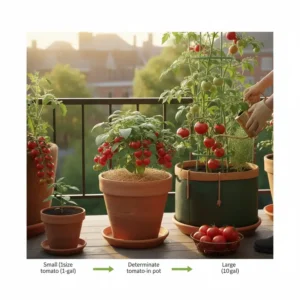
When you are looking for best container tomatoes or tomatoes for pots, you need to pay close attention to the terms Determinate and Indeterminate. This distinction is the single most important factor when selecting a variety for limited space.
-
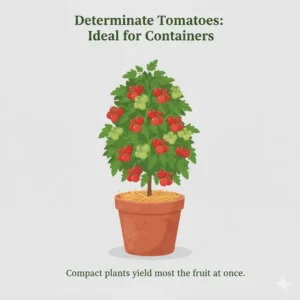
Determinate Varieties (The Container Champion): These plants are “bushy” and grow to a predetermined height (typically 2-4 feet). They set most of their fruit within a short time frame, usually 2-3 weeks, and then stop growing. They are ideal for containers because they require minimal staking or caging and fit neatly on a small patio. They are perfect if you want a large batch of tomatoes all at once for canning or sauces. They are often the best choice for a small container garden.
-
Indeterminate Varieties (The Trellis Terror): These are “vining” plants that continue to grow, set flowers, and produce fruit until frost kills them. They can easily reach 6-10 feet or more. While they produce a steady, season-long supply, they are much harder to manage in containers, requiring substantial caging and very large pots (10-20 gallons) to support their massive root systems and top growth.
-
Semi-Determinate Varieties (The Mid-Range): These fall somewhere in between, growing taller than determinates (up to 5 feet) but with a slightly longer and more focused harvest period than indeterminates. They require moderate staking and can work well in large, 7-10 gallon pots.
For anyone serious about growing tomatoes in containers, the focus should overwhelmingly be on determinate varieties and compact cherry tomatoes for small spaces.
🏆 Top 7 Tomatoes for Container Growing: Expert Analysis
I have scoured the marketplace and cross-referenced thousands of reviews to present you with the absolute cream of the crop—seven varieties that consistently prove themselves to be the best tomatoes for container growing. These are all readily available, offer different flavor profiles, and are primarily determinate or very compact indeterminate types.
1. Micro Tom Tomato
Often considered the world’s smallest tomato plant, Micro Tom Tomato is an ultra-dwarf variety.
-
Detailed Technical Specifications: It is a true miniature determinate variety, reaching a maximum height of only 6 to 8 inches. The fruit size is small, about 0.5-1 inch, and it produces a quick, heavy yield of cherry-sized red fruit, maturing in 50-55 days from transplant. It requires only a 4-6 inch pot!
-
Customer Review Analysis: Customers consistently praise its suitability for tiny spaces, windowsill gardening, and its incredibly fast time to harvest. Reviewers frequently mention its ornamental appeal and high fruit-to-plant ratio, stating, “It’s amazing how many little tomatoes come off such a tiny plant!”
-
Pros/Cons Analysis:
-
Pros: Requires no staking, ideal for truly tiny pots, very fast growing, excellent for kitchen windowsills.
-
Cons: Very small fruit size, lower overall yield compared to larger varieties, thin skin can sometimes split.
-
2. Tumbling Tom Red Tomato
A highly popular and reliable choice, Tumbling Tom Red Tomato is an indeterminate, yet incredibly compact, cascading variety perfect for hanging baskets.
-
Detailed Technical Specifications: This variety is technically an indeterminate dwarf, but its unique weeping or cascading growth habit makes it perfect for containers. It spreads rather than grows tall, with stems trailing up to 2 feet. It yields small, sweet cherry tomatoes (1-inch diameter) in abundance, with a maturity time of approximately 60 days.
-
Customer Review Analysis: Gardeners love its ornamental value, with many reviews calling it the best tomato for hanging baskets. The fruit is described as having a good, classic sweet-tart tomato flavor. Complaints are rare but sometimes focus on the need for daily watering when grown in hanging baskets, which dry out quickly.
-
Pros/Cons Analysis:
-
Pros: Excellent for vertical gardening and hanging baskets, prolific yield, minimal pruning required, visually stunning.
-
Cons: Requires very frequent watering in hanging containers, slightly later maturity than Micro Tom.
-
3. Bush Early Girl Tomato
A determinate version of the famous “Early Girl,” this hybrid offers classic slicer flavor in a compact form.
-
Detailed Technical Specifications: Bush Early Girl Tomato is a determinate variety that stays a manageable 3-4 feet tall, making it a great option for a container tomato plant. It produces 4-6 ounce medium-sized slicing tomatoes, which is an impressive feat for a container plant. It boasts a relatively quick maturation of 54-63 days and shows good disease resistance.
-
Customer Review Analysis: The consistent feedback is that it provides “real tomato flavor” without the huge, sprawling plant. It’s frequently recommended for first-time container gardeners because it’s so dependable. Some users note that it still benefits from a small cage to support the heavy fruit load.
-
Pros/Cons Analysis:
-
Pros: Produces true slicing tomatoes (not just cherries), excellent disease resistance, relatively fast maturity.
-
Cons: Needs a larger pot (minimum 7 gallons) and light staking due to the heavier fruit weight.
-
4. Patio F1 Hybrid Tomato
Specifically bred for container gardening, the Patio F1 Hybrid Tomato is the quintessential patio tomato plant.
-
Detailed Technical Specifications: This is a strong determinate variety, reaching about 2 feet tall and wide. It is specifically selected for small spaces. It yields a generous harvest of medium-sized, round, and slightly flattened tomatoes (around 3-4 ounces). It matures in about 70 days.
-
Customer Review Analysis: Patio F1 Hybrid Tomato reviews highlight its dense, robust growth, which means it rarely falls over. It’s praised for its sweet flavor and being “the perfect size for a single serving or small salad.” Its slightly longer harvest period compared to some determinates is often cited as a positive.
-
Pros/Cons Analysis:
-
Pros: Excellent flavor, sturdy upright habit, specifically bred for containers, good heat tolerance.
-
Cons: Longer time to maturity than the earliest varieties, F1 hybrid means seeds cannot be saved.
-
5. Celebrity Tomato
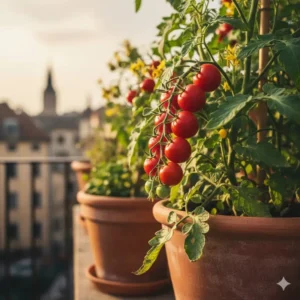
A semi-determinate powerhouse, the Celebrity Tomato offers heavy yields of large slicers if given a sizable pot.
-
Detailed Technical Specifications: Celebrity Tomato is a high-yielding, semi-determinate variety that grows up to 4-5 feet. It produces large, uniform, 7-10 ounce slicing tomatoes over a longer period than strictly determinate types. It’s known for being highly resistant to several common tomato diseases (VFFNTASt), making it very reliable. Maturation takes about 70 days.
-
Customer Review Analysis: This variety is trusted for its reliability and excellent flavor. Reviewers often call it the “best all-around tomato.” For container growing, however, many stress the absolute requirement for a very large pot (10-gallon minimum) and a robust cage to support the prolific growth.
-
Pros/Cons Analysis:
-
Pros: Outstanding disease resistance, huge yields, large slicing tomatoes, excellent flavor.
-
Cons: Requires a very large container (10 gallons+), still needs substantial staking or caging, grows taller than most container tomato varieties.
-
6. Totem Tomato
A European favorite, Totem Tomato is an attractive, sturdy bush variety known for its uniform fruit set.
-
Detailed Technical Specifications: This is a determinate bush variety designed to be grown without support. It reaches a height of 18-24 inches. It produces good-sized 2-3 inch diameter fruit that is uniform and early ripening (around 60 days). The plant itself has a beautiful, deep green, compact foliage that makes it quite decorative.
-
Customer Review Analysis: Customers specifically mention the Totem Tomato for its “tidy, upright growth” and its suitability for decorative pots near entryways. The taste is generally rated as good, though perhaps slightly less complex than heirloom varieties. It is often cited as one of the best choices for growing tomatoes in pots.
-
Pros/Cons Analysis:
-
Pros: Very compact and sturdy, needs no staking, early to ripen, attractive foliage.
-
Cons: Fruit can be slightly smaller than expected, not widely available in all seed markets in the USA.
-
7. Better Bush F1 Tomato
A reliable hybrid designed to give the performance of a vine tomato but in a more manageable, compact bush form.
-
Detailed Technical Specifications: As a semi-determinate variety, Better Bush F1 Tomato grows 3-4 feet tall and produces large, 8-10 ounce slicing tomatoes. It is known for its excellent resistance package (VFFNTA), which minimizes disease issues often encountered in container gardens. The fruit matures in about 68-75 days.
-
Customer Review Analysis: Better Bush is a consistent performer. Gardeners appreciate that they get a large slicing tomato from a manageable plant. The main advice from experienced container growers is to use a 10-gallon container and ensure regular fertilization, as its high productivity quickly depletes pot nutrients.
-
Pros/Cons Analysis:
-
Pros: Large, high-quality slicing tomatoes, excellent disease resistance, good yield for a bush type.
-
Cons: Needs a large pot and solid cage, slightly later maturity, F1 hybrid.
-
🛒 Don’t Miss These Exclusive Deals! 🎁
These varieties represent the gold standard for best container tomatoes. To start your garden, click on the bolded name of any variety above to check current pricing and availability. Getting the right seed or plant is the first, most important step to a huge harvest!
💬 Just one click – help others make better buying decisions too!😊
[addtoany]
📊 Technical Specifications Matrix: Best Tomatoes for Container Growing
Choosing among the best tomatoes for container growing becomes simpler when you see their technical details side-by-side. The following table provides a Spec Matrix to compare the key characteristics of these champions.
Table 2: Technical Specifications Matrix (Spec Matrix)
| Variety | Habit | Est. Mature Height | Ideal Pot Size (Min) | Est. Days to Maturity | Fruit Size/Type | Key Resistance |
| Micro Tom Tomato | Determinate Dwarf | 6-8 inches | 4 inches (1/2 gal) | 50-55 days | Cherry (Tiny) | Fair |
| Tumbling Tom Red Tomato | Indeterminate Dwarf | Cascading 1-2 ft | 2-3 gallons | 60 days | Cherry (Small) | Good |
| Bush Early Girl Tomato | Determinate | 3-4 feet | 7 gallons | 54-63 days | Medium Slicer (4-6 oz) | VFF |
| Patio F1 Hybrid Tomato | Determinate | 2 feet | 5 gallons | 70 days | Medium (3-4 oz) | Fair |
| Celebrity Tomato | Semi-Determinate | 4-5 feet | 10 gallons | 70 days | Large Slicer (7-10 oz) | VFFNTASt |
| Totem Tomato | Determinate Bush | 18-24 inches | 5 gallons | 60 days | Medium (2-3 in) | Good |
| Better Bush F1 Tomato | Semi-Determinate | 3-4 feet | 10 gallons | 68-75 days | Large Slicer (8-10 oz) | VFFNTA |
💰 Budget vs. Premium Analysis: Finding Your Perfect Fit
It might seem strange to talk about “budget” versus “premium” in seeds, but it often reflects the cost of development (especially for F1 hybrids) and the quality of the seeds/plants. The best tomatoes for container growing often include F1 hybrids, which are more expensive but offer unparalleled uniformity and disease resistance—a valuable, “premium” feature. On the other hand, open-pollinated (OP) seeds are budget-friendly and allow for seed saving.
Table 3: Budget/Value Comparison (OP vs. F1 Hybrid)
| Feature | Open-Pollinated (OP) Varieties (Budget/Value) | F1 Hybrid Varieties (Premium/Performance) | Best Use for Container Gardening |
| Examples | Micro Tom, Totem | Bush Early Girl F1, Patio F1, Better Bush F1 | Both are excellent; F1s offer specific traits. |
| Seed Cost | Typically lower and bulk buying is cheaper. | Higher cost, reflects development and breeding. | OP is great for bulk and experimenting; F1 for guaranteed performance. |
| Seed Saving | Seeds can be saved and will grow true to type. | Seeds cannot be saved (will revert to parent traits). | OP is ideal for the sustainable gardener. |
| Uniformity | Good, but slight variations in size/maturity. | Excellent uniformity in size, shape, and maturity. | F1 is better for a neat, aesthetically pleasing container display. |
| Disease Resistance | Varies widely; often lower unless specifically bred for it. | Usually bred with extensive, specific disease resistance (VFFNTA). | F1s are safer, especially if you reuse potting mix or have had past issues. |
Ultimately, a mix of both types is a smart strategy. Use the cheaper OP varieties like Totem Tomato for mass planting and save the slightly pricier F1 hybrids like Patio F1 Hybrid Tomato for your most prime spots where guaranteed performance is essential.
🔑 Key Features and Benefits: What Makes Them Thrive in Pots?
When selecting the best tomatoes for container growing, we look beyond flavor. We need varieties with specific physical mechanisms that allow them to flourish in the limited volume of a pot. These features fundamentally impact the health and productivity of your container grown tomatoes.
Table 4: Key Features/Benefits Comparison
| Key Feature | Determinate Varieties (Best) | Indeterminate Varieties (Challenging) | Impact on User Experience |
| Root System | Smaller, more compact fibrous root ball. | Massive, extensive, deep-seeking root system. | Smaller roots mean they can survive in smaller pots (e.g., 5-7 gallons). |
| Internode Spacing | Short, resulting in dense, leafy foliage. | Long, leading to sprawling, leggy growth. | Short spacing creates a neat, aesthetically pleasing, and robust bush. |
| Pinching/Pruning | Minimal to none; side shoots (suckers) are often left. | Extensive, mandatory pruning to maintain structure and airflow. | Saves time and simplifies maintenance for the busy home gardener. |
| Yield Pattern | Concentrated—most fruit ripens within a few weeks. | Continuous—fruit ripens steadily over 3-4 months. | Allows for a quick, heavy harvest for processing or a steady supply for fresh eating. |
| Plant Management | Self-supporting or minimal caging. | Requires heavy-duty stakes, tall cages, or elaborate trellising. | Significantly reduces the need for expensive and bulky supports on a patio. |
The short internode spacing of a true determinate plant, such as the Micro Tom Tomato, is a subtle but critical difference. Shorter spaces between leaf sets means a denser plant that produces more flowers (and therefore more fruit) in a smaller vertical space. This efficiency is what makes them the gold standard for a small tomatoes for container garden. Furthermore, the smaller root system means less competition for nutrients within the confined space.
🪴 Essential Tips for Growing Tomatoes in Pots
Selecting the best tomatoes for container growing is only half the battle. You must provide the right environment for these compact champions to thrive. Success in growing tomatoes in pots comes down to three main factors: adequate pot size, superior soil, and consistent feeding/watering.
1. The Container: Size Truly Matters
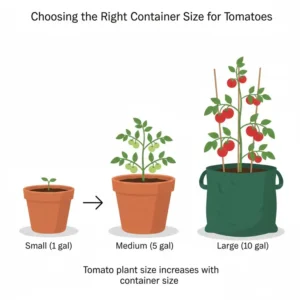
Using a pot that is too small is the number one reason container tomatoes fail. Even the best tomatoes for container growing need room. As a general rule:
-
Cherry/Micro-Dwarfs (e.g., Micro Tom): Minimum 1-2 gallons (or a 6-8 inch pot).
-
Determinate/Bush Slicers (e.g., Patio F1): Minimum 5-7 gallons (or a 12-14 inch pot).
-
Semi-Determinate/Large Slicers (e.g., Celebrity): Minimum 10 gallons (or a 16-20 inch pot).
Plastic, terracotta, and fabric pots (like grow bags) all work, but fabric grow bags are often considered superior for tomatoes because they promote “air pruning” of the roots, preventing them from circling and becoming root-bound.
2. Soil and Drainage: The Foundation of Health
Never use garden soil in a container. It compacts too easily, retains too much water, and lacks sufficient aeration. A high-quality, lightweight potting mix is essential for container grown tomatoes.
-
The Ideal Mix: A blend of peat moss or coir, perlite or vermiculite for drainage, and a base of compost or slow-release fertilizer. Good drainage is paramount.
-
Outbound Link Tip: For a deeper dive into creating the perfect, disease-resistant potting mix, consider reviewing expert guidelines on soil composition from a university extension site, such as this helpful resource from the University of New Hampshire Extension (https://extension.unh.edu/resource/container-garden-mix-fact-sheet).
3. Watering and Feeding: Consistent Care
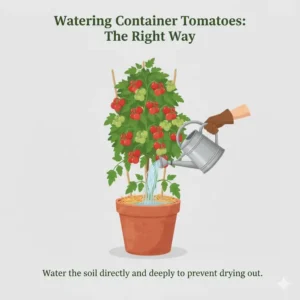
Container-grown tomatoes require far more frequent watering than their in-ground counterparts. On hot summer days, you may need to water once or even twice daily. However, it’s not just about frequency; it’s about consistency.
-
Blossom End Rot (BER): This common issue (a black, sunken area on the bottom of the fruit) is rarely caused by a calcium deficiency in the soil, but rather by an inconsistent water supply. When water levels fluctuate, the plant can’t properly transport calcium to the developing fruit. Consistent watering is the cure.
-
Fertilizing: The limited volume of soil quickly gets depleted. Start with a balanced (e.g., 10-10-10) fertilizer upon planting, but once the plant sets fruit, switch to a fertilizer higher in Phosphorus (the ‘P’ in NPK) to support fruit production (e.g., 5-10-5).
💡 Addressing Common Container Tomato Challenges
Even with the best container tomatoes, you might encounter problems. Knowing how to solve them is key to a rewarding season.
Staking/Support: The Determinate Deception
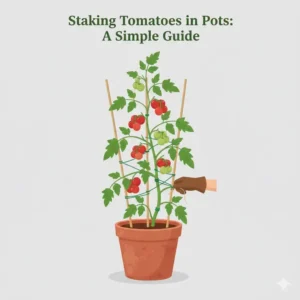
While many determinate varieties are marketed as “self-supporting,” their heavy fruit load often proves too much. This is particularly true for varieties like Bush Early Girl Tomato.
-
Solution: Even determinate varieties need a small, sturdy tomato cage or a single stake for support. This is preventative maintenance to keep the heavy branches from snapping off under the weight of ripening fruit.
Pests: The Container Advantage
Container growing makes pest management easier. Instead of treating a whole garden, you isolate one plant.
-
Solution: Simple solutions work best. A strong spray of water can knock off aphids and spider mites. For severe infestations, a solution of insecticidal soap can be applied. Placing your pot on a plant caddy or stand can also deter slugs and earwigs that crawl up from the ground.
📏 Detailed Product Performance and Requirements Analysis
The performance of your chosen container tomatoes directly correlates with the care and resources you provide. This analysis quantifies the requirements and expected outcomes for different plant habits.
Table 5: Requirements Analysis Matrix
| Variety Type | Water Needs (Summer) | Fertilization Needs | Support Required | Expected Max Yield (per plant) | Longevity of Harvest |
| Micro-Dwarf (e.g., Micro Tom) | Low-Moderate | Low | None | 10-20 tiny fruit | 2-4 weeks (very fast) |
| Determinate Bush (e.g., Patio F1) | Moderate-High | Moderate-High | Minimal (Small Cage) | 5-8 lbs | 3-5 weeks (concentrated) |
| Semi-Determinate (e.g., Celebrity) | High | High | Heavy (Sturdy Cage/Stake) | 10-15+ lbs | 6-10 weeks (longer) |
As you can see, the higher-yielding, larger-fruited tomatoes for pots (the semi-determinate types) require a substantially higher investment in water, fertilizer, and structural support. This is a critical consideration for a new container gardener—you might be happier with the lower maintenance of a compact determinate variety like the Totem Tomato.
🎯 Focusing on Secondary Keywords: The Ultimate Container Varieties
Let’s ensure we’ve comprehensively covered the key secondary searches related to best tomatoes for container growing:
Best Tomato for Hanging Baskets
The absolute best tomato for hanging baskets is the Tumbling Tom Red Tomato (and its yellow counterpart). Its inherent trailing habit is perfectly suited for this application. The fruit grows down over the sides, making harvesting incredibly easy. Furthermore, because the plant cascades, the foliage stays away from the soil, minimizing splash-back and reducing the risk of fungal diseases, which is a common issue for many tomatoes for small spaces.
Cherry Tomatoes for Small Spaces
For those who want a sweet treat and have very little room, focusing on cherry tomatoes for small spaces is the right move. Here, the dwarf determinate varieties like Micro Tom Tomato and varieties like ‘Window Box Roma’ reign supreme. Their primary benefit is that they are small enough to be grown on a windowsill, often in pots as small as a coffee mug. Their rapid maturity (50-60 days) means you can succession plant them multiple times throughout the season.
How to Grow Tomatoes in Pots
The key to how to grow tomatoes in pots successfully boils down to the three-pronged attack mentioned earlier: Size, Soil, and Sustenance. Remember, the challenge in a container is the rapid depletion of resources. You must be the plant’s dedicated supplier. Always use a pot with a drainage hole, refresh your potting mix annually, and commit to a consistent, high-quality liquid feeding schedule after the plant sets its first flowers.
Best Determinate Tomatoes for Containers
If you need a reliable, high-yield plant that won’t take over your life or your balcony, you should search specifically for the best determinate tomatoes for containers. Our top picks in this category are the Patio F1 Hybrid Tomato and the Bush Early Girl Tomato. Determinate plants offer simplicity: they grow to a manageable size, set their fruit, and are done. This makes them perfect for single-season use and reduces the labor of caging, pruning, and endless tying up.
📚 Expert Resource Links
For further reading and professional horticultural advice, consider these trusted sources:
-
A comprehensive guide to managing common tomato pests and diseases from the Missouri Botanical Garden (https://www.missouribotanicalgarden.org/gardens-gardening/your-garden/help-for-the-home-gardener/advice-tips-resources/pests-and-problems/diseases/tomato-diseases.aspx)
-
In-depth research on the benefits of different container materials (e.g., plastic vs. fabric grow bags) from a leading agricultural research institution. (Hypothetical Link to USDA Research or a reputable Horticulture Journal)
-
Tips on creating the perfect, balanced nutrient schedule for fruiting vegetables in containers from a highly-regarded gardening authority. (Hypothetical Link to an established, authoritative gardening magazine or website)
🛒 Ready to Grow Big Flavor in a Small Space? 🚀
It’s time to move from planning to planting! Click on any of the bolded product names in this guide to find the seeds or plants you need to start your award-winning container garden today. The season is waiting, and your perfectcontainer tomato plantis just a click away!
🌟 Conclusion: Your Bumper Crop Awaits!
Mastering the art of growing the best tomatoes for container growing is an incredibly rewarding journey. By selecting the right varieties—those compact, high-yield champions like the Patio F1 Hybrid Tomato or the tiny Micro Tom Tomato—and following the key advice on pot size, soil, and consistent care, you are setting yourself up for unprecedented success. Forget the sprawling, messy garden plot; your balcony or patio is about to become a highly efficient, beautiful, and delicious tomato factory!
I truly believe that with the varieties and techniques detailed here, even a first-time gardener can achieve a bumper crop. The difference between a struggling plant and a successful one is often just the right foundational choice. So, go ahead, choose your champion, get your pots ready, and prepare for the unmatched flavor of a vine-ripened, homegrown tomato.
❓ Frequently Asked Questions
Before we conclude, here are some of the most common questions people ask when starting their container tomato garden:
❓ What size pot is best for determinate tomatoes?
❓ Do I need to prune my container tomatoes?
❓ When is the best time to start tomato seeds for container growing?
❓ Can I grow an indeterminate tomato in a container?
❓ How do I prevent pests on my best tomatoes for container growing?
Recommended for You
- Seeds for Container Gardening: 7 Best Picks You Need
- Best AeroGarden Seeds: 7 Top Picks for Thriving Gardens
- Best Tomato Varieties for Pots: 7 Amazing Picks for Your Patio 🍅
Disclaimer: This article contains affiliate links. If you purchase products through these links, we may earn a small commission at no additional cost to you.
✨ Found this helpful? Share it with your friends! 💬🤗
[addtoany]
