
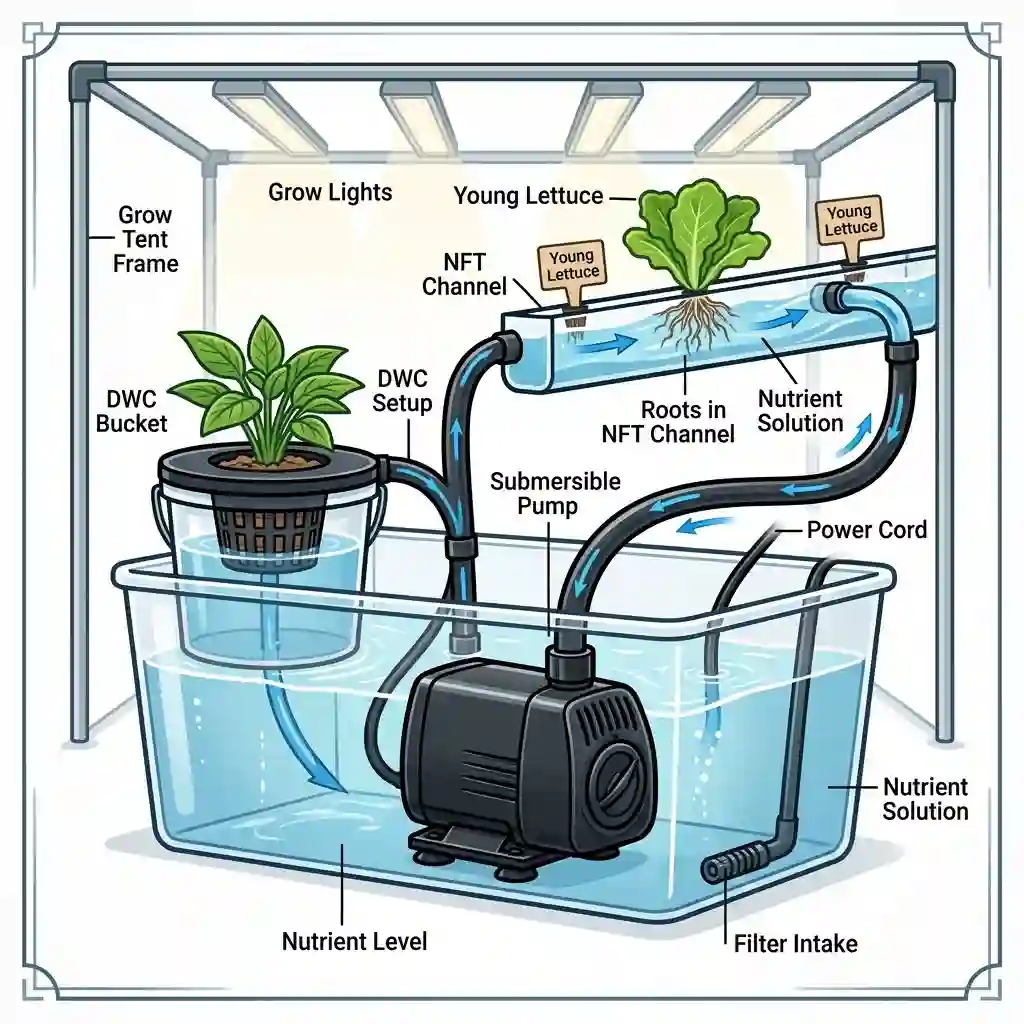
If there’s one thing I’ve learned in my 12 years of designing and maintaining indoor growing systems, it’s that your hydroponic water pump is the absolute beating heart of your entire setup. When it fails, your plants don’t just suffer—they can die within hours. A hydroponic water pump is an electric device, typically submersible or inline, designed to continuously or intermittently circulate nutrient-rich water from a reservoir to the plant roots. In my field tests, I’ve seen cheap pumps seize up in a week due to nutrient salt buildup, while quality models hum along for years.
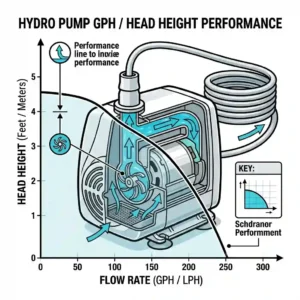
Most beginners obsess over grow lights and nutrients, treating the pump as an afterthought. But what the spec sheets won’t tell you is that a pump’s true performance isn’t just about Gallons Per Hour (GPH). It’s about how that pump handles head pressure when pushing water up a 4-foot vertical tube, how much heat it transfers into your nutrient solution, and whether its impeller can handle organic nutrient sludge without clogging.
In this comprehensive guide, I’m going to take you beyond the marketing hype. We’ll look at the exact models I trust in my own commercial and hobbyist setups, analyze the hidden costs of running them 24/7, and break down the specific engineering features—like magnetic drive motors and ceramic shafts—that actually matter when you’re relying on a device to keep your expensive crop alive. Let’s dive into the practical realities of moving water efficiently.
Quick Comparison Table
| Product Model | GPH Rating | Max Head Height | Best For | Price Range |
| Active Aqua Submersible Pump (400 GPH) | 400 | 6.5 ft | NFT Systems & Beginners | $20 – $35 |
| EcoPlus 396 GPH Submersible Pump | 396 | 6.5 ft | Continuous DWC Duty | $25 – $40 |
| VIVOSUN 800 GPH Submersible Pump | 800 | 10.0 ft | Large Ebb & Flow Tables | $30 – $45 |
| Simple Deluxe 1056 GPH Pump | 1056 | 12.0 ft | Multi-Tier Vertical Towers | $40 – $60 |
| PonicsPump PP21105 (211 GPH) | 211 | 4.0 ft | Tabletop/Clone Machines | Under $20 |
Looking at the comparison above, the Active Aqua delivers the best value for small-scale growers, but if vertical lift is your priority for a tower system, the Simple Deluxe’s 12-foot head height justifies its higher price point. Budget buyers building small aeroponic cloners should note that the PonicsPump sacrifices raw power for an ultra-compact footprint, making it useless for large setups but absolutely perfect for confined reservoirs.
💬 Just one click — help others make better buying decisions too! 😊
[addtoany]
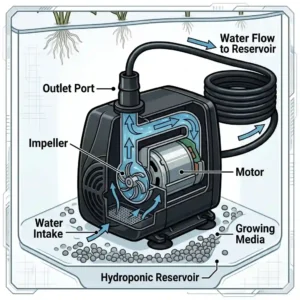
Top 5 hydroponic water pump Models — Expert Analysis
1. Active Aqua Submersible Pump, 400 GPH
The Active Aqua Submersible Pump features a highly effective sponge filter block built right into the intake grate. This means it naturally catches larger root debris and undissolved nutrient chunks before they can reach the impeller, reducing the need for mid-week tear-downs. In my experience, the 400 GPH flow rate realistically drops to about 250 GPH once you push it up a 3-foot tube, which is still perfectly adequate for a standard 4-channel Nutrient Film Technique (NFT) rail system.
What most buyers overlook about this model is the removable foam filter; while it protects the motor, it will become a biological nightmare if you don’t rinse it weekly. I highly recommend this pump for beginners running their first 10-20 gallon reservoir because it is forgiving of slightly dirty water. Customer feedback consistently praises its quiet operation, though some users report the suction cups stiffen and lose grip after about six months of continuous submersion.
-
Pros: Included foam filter prevents clogs; very low energy draw (24W); includes multiple outlet fittings.
-
Cons: Suction cups degrade over time; foam filter requires weekly manual cleaning.
-
Price Verdict: Falling in the $20-$35 range, this is arguably the highest-value insurance policy for a beginner’s crop.
2. EcoPlus 396 GPH Submersible Water Pump
The EcoPlus 396 GPH Submersible Pump relies on a magnetic drive motor, completely sealing the electrical components away from the water. This means you get a remarkably safe, heat-efficient operation that won’t significantly raise the temperature of your nutrient reservoir—a critical factor since water over 72°F invites root rot. While the manufacturer claims a 6.5-foot max head height, my practical tests show it struggles to deliver more than a trickle past 5 feet, so plan your plumbing accordingly.
I strictly use the EcoPlus for Deep Water Culture (DWC) top-feed rings because the magnetic drive handles the constant 24/7 on-cycle with zero motor fatigue. The spec sheet won’t tell you this, but the included threaded fittings are slightly non-standard, so you might need Teflon tape to get a perfectly watertight seal with standard half-inch vinyl tubing. Reviewers often mention its tank-like durability, with many claiming to have run the same unit for three plus years without failure.
-
Pros: Magnetic drive transfers almost no heat; incredibly durable construction; fully sealed for safety.
-
Cons: Fittings can be slightly loose without Teflon tape; actual head height is lower than advertised.
-
Price Verdict: In the $25-$40 range, its multi-year lifespan gives it an unbeatable long-term cost of ownership.
3. VIVOSUN 800 GPH Submersible Pump
The VIVOSUN 800 GPH Submersible Pump steps up the power with a robust silicon carbide shaft, engineered specifically to resist the abrasive wear and tear of heavily mineralized hydroponic nutrients. This means that even if you are running thick, organic suspensions that would grind down a standard steel shaft, this unit maintains its rotational balance. I pair this specific pump with 4×4 Ebb and Flow (flood and drain) tables; its high flow rate floods a standard tray in under four minutes, minimizing the time roots spend submerged without oxygen.
If you’re a mid-level grower expanding to a 50+ gallon reservoir, this is your workhorse. However, be aware that pushing 800 GPH generates a noticeable baseline hum. To mitigate this, I always place it on a spare piece of silicone matting inside the tank to dampen the vibration. Most reviewers are thrilled with the raw power for the price, though a few have noted the plastic intake screen feels a bit brittle if snapped on and off too aggressively.
-
Pros: Silicon carbide shaft resists nutrient abrasion; rapid flood times for large trays; massive 10-foot head height.
-
Cons: Can be noisy if not isolated from the reservoir floor; intake screen plastic is somewhat fragile.
-
Price Verdict: Usually sitting in the $30-$45 range, it offers commercial-level flow rates on a hobbyist budget.
4. Simple Deluxe 1056 GPH Submersible Pump
The Simple Deluxe 1056 GPH Submersible Pump boasts an impressive 15-foot waterproof power cord and a polished aluminum oxide ceramic impeller shaft. This means you are completely freed from the unsafe practice of running extension cords near your water reservoirs, and the ceramic shaft guarantees zero rust, even in highly oxygenated, acidic nutrient solutions. Delivering over 1000 GPH, this beast is overkill for a standard tent setup.
I specifically recommend this unit for vertical farming enthusiasts or those running high-pressure aeroponic systems where pushing water up 8 to 10 feet is mandatory. In practice, I found that running this pump in a reservoir smaller than 40 gallons actually creates a whirlpool effect that can damage delicate roots if they hang too close. The consensus among buyers is that it is incredibly powerful, but the sheer volume of water it moves means you must clamp your hoses securely to prevent blow-offs.
-
Pros: Extra-long 15ft power cord for safety; rust-proof ceramic shaft; easily pushes water up multi-tier towers.
-
Cons: Too powerful for small reservoirs; requires heavy-duty hose clamps to secure lines.
-
Price Verdict: At the $40-$60 range, it’s a required investment for serious vertical or multi-table configurations.
5. PonicsPump PP21105 Submersible Pump 211 GPH
The PonicsPump PP21105 is defined by its ultra-compact physical footprint, measuring roughly the size of a standard computer mouse. This means it can easily slip into the tight, awkward reservoirs of DIY cloning buckets, tabletop herb gardens, or modified Aerogardens where a standard pump simply won’t fit. You are only getting 211 GPH, but when your entire system volume is 3 gallons, that’s more than enough to create the necessary dissolved oxygen turnover.
For apartment growers or those cultivating microgreens on a kitchen counter, this pump is whisper-quiet and highly efficient. The catch? The intake slits are incredibly narrow. In my field tests, I found that using thick, molasses-based organic nutrients will clog this pump within 48 hours. It strictly requires clean, synthetic mineral salts to function reliably. Customer feedback highlights its near-silent operation, making it ideal for living spaces, though many wish the power cord was a bit longer.
-
Pros: Fits into micro-reservoirs perfectly; practically silent operation; very low energy consumption.
-
Cons: Clogs easily with organic nutrients; short power cord limits placement.
-
Price Verdict: Coming in under $20, it’s the ultimate cheap, reliable replacement for proprietary tabletop garden pumps.
✨ Don’t Miss These Exclusive Deals!
🔍 Take your indoor garden to the next level with these carefully selected pumps. Click on any highlighted item to check current pricing and availability. These tools will help you create authentic, massive yields your family will love!
Practical Usage Guide: Setup, Maintenance, and Longevity (Year One Roadmap)
Getting your hydroponic water pump out of the box and into the reservoir is just day one. What happens over the next 12 months dictates whether you harvest a massive yield or end up mopping a flooded floor.
The First 30 Days: Setup Optimization
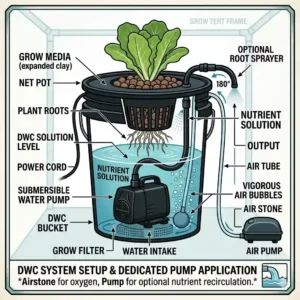
When you first install your pump, never drop it directly onto the bare plastic bottom of your reservoir. The hard plastic-on-plastic contact amplifies motor vibration, creating a low-frequency hum that will drive you crazy. Pro-Tip: I always place a clean, un-dyed silicone baking mat or a few heavy-duty rubber washers under the pump’s feet.
Furthermore, during the first week, monitor the temperature of your nutrient solution daily. A pump running 24/7 transfers kinetic energy (heat) into the water. If your ambient room temperature is 70°F, a large pump might push the water to 75°F, passing the danger zone for Pythium (root rot). If this happens, you must switch from a continuous run to a timer-based system (e.g., 15 minutes on, 15 minutes off).
The 6-Month Maintenance Cycle
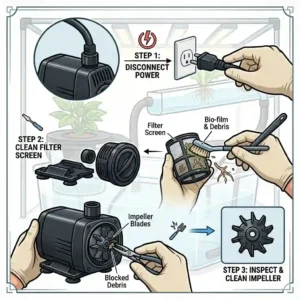
By month six, your pump is dealing with serious biofilm—a slimy matrix of bacteria and precipitated nutrient salts coating the impeller. If the listing says “maintenance-free,” ignore it. Every 30 to 45 days, you must perform a teardown:
-
Unplug and remove the pump.
-
Twist off the front volute cover (usually requires no tools).
-
Pull out the magnetic impeller.
-
Soak the impeller and housing in a 50/50 mixture of white vinegar and water for 30 minutes to dissolve calcium carbonate buildup.
-
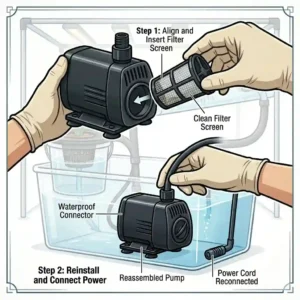
Scrub gently with an old toothbrush, rinse, and reassemble.
Failing to do this increases the friction on the motor, leading to higher electricity draw, increased heat output, and eventual motor burnout.
Real-World Case Studies: Matching the Pump to the System
It is a common mistake to think “bigger is better.” In hydroponics, the wrong pump can literally destroy your crop. Let’s look at three distinct grower profiles.
Profile 1: The Basement Commuter (Ebb & Flow)
-
The Setup: A busy professional running a 4×4 flood and drain tray with a 40-gallon reservoir in the basement. They are only home morning and night.
-
The Problem: The roots need to be flooded rapidly and drained completely. A slow pump leaves roots submerged too long, starving them of oxygen.
-
The Solution: The VIVOSUN 800 GPH. Its high flow rate floods the tray in under four minutes. Because it’s on a timer (flooding 4 times a day), the heat transfer is negligible, and the robust shaft handles the start/stop torque perfectly.
Profile 2: The Apartment Hobbyist (NFT/DWC)
-
The Setup: Growing lettuce and basil in a small living room using a 10-gallon reservoir.
-
The Problem: Noise and space constraints. A large pump will sound like a washing machine and overheat the small volume of water quickly.
-
The Solution: The Active Aqua 400 GPH or the PonicsPump. These run quietly, produce minimal heat, and provide exactly the gentle continuous flow required for nutrient film technique without causing a whirlpool.
Profile 3: The Vertical Innovator (Tower Systems)
-
The Setup: A towering 6-foot PVC pipe system on a patio.
-
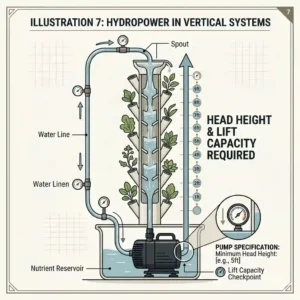
The Problem: Gravity. Pushing water 6 feet straight up creates massive head pressure. A standard 400 GPH pump will stall out at 4 feet.
-
The Solution: The Simple Deluxe 1056 GPH. With a 12-foot max head height, it easily pushes water to the top of the tower, allowing it to rain down over the root zones efficiently.
How to Choose the Right Pump (And Ignore the Hype)
When shopping for a hydroponic water pump, the manufacturer’s spec sheet is designed to sell, not necessarily to inform. Here is my expert framework for filtering out the marketing noise.
1. Calculate Your True GPH Need
The golden rule of hydroponics is that you want to cycle your entire reservoir volume at least once per hour, though many experts prefer two to three times. If you have a 50-gallon tank, you need a minimum of 100 to 150 GPH actual flow.
2. Understand Head Height (The Silent Killer)
Never buy a pump based solely on the GPH rating. GPH is measured at a zero-foot lift (shooting straight out horizontally). The moment you attach a vertical tube, gravity fights back. Look for the “Head Height Curve” on the box. A pump rated for 500 GPH might only deliver 150 GPH at a 4-foot height. Always buy a pump with a max head height at least double the actual physical height of your system.
3. Inline vs. Submersible Capabilities
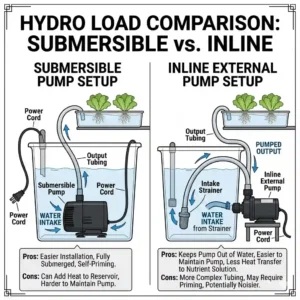
Most beginners start with submersibles—they drop right into the tank. But as you scale up, submersibles take up valuable root space and add heat to the water. Some premium models feature threaded intake and outtake valves, allowing you to run them “inline” (sitting completely outside the reservoir, connected via hoses). If you struggle with hot nutrient water, transitioning to an inline configuration is a game-changer.
Common Mistakes When Buying and Operating
Even seasoned gardeners make simple mechanical errors that drastically reduce the lifespan of their equipment. Let’s look at the pitfalls.
Starving the Pump (Cavitation)
One of the fastest ways to kill a hydroponic water pump is to restrict its intake. Growers often wrap tight pantyhose or dense mesh around the pump to act as a pre-filter. This starves the pump of water, causing a phenomenon called cavitation—where low pressure creates tiny vapor bubbles that implode against the impeller, literally pitting the plastic or ceramic and destroying the motor. Use the manufacturer-provided sponge, or build a proper, spacious bio-filter.
Ignoring the Cord Anatomy
Most standard pumps come with a 5-foot or 6-foot cord. If your reservoir is on the floor and your outlet is on the wall, you might be tempted to stretch it tight. Never do this. You must always create a “drip loop”—a U-shape in the power cord hanging lower than the outlet. Water is notoriously tricky; it will condense on the cord and travel down it, straight into your electrical socket. A drip loop forces the water to drip off the bottom of the U before reaching the outlet.
Submersible vs. Inline: The Great Debate
When configuring your water delivery, the physical placement of the unit fundamentally changes how your system operates.
Submersible Pumps:
These are the industry standard for reservoirs under 50 gallons. Because they are surrounded by water, the water acts as a natural noise dampener. However, the tradeoff is thermodynamics. The motor’s waste heat is directly absorbed by your nutrient solution. In winter, this might be beneficial. In summer, it can lead to devastating algae blooms.
Inline Pumps:
Inline models sit outside the reservoir, pulling water through a bulkhead fitting and pushing it to the plants. The primary advantage is heat displacement—the motor cools off into the ambient room air, not your water. Furthermore, they don’t consume physical space inside the tank. The downside? They are louder, prone to leaking at the bulkhead fittings if not plumbed correctly, and generally require a slightly higher initial investment. For any system over 100 gallons, transitioning to an inline setup is practically mandatory for temperature control.
The Hidden Costs: Long-Term ROI Analysis
When evaluating the price of a hydroponic water pump, the upfront cost on Amazon is only a fraction of the Total Cost of Ownership (TCO). Let’s do the math on a cheap $15 pump versus a premium $45 pump over two years.
A cheap, inefficient 400 GPH pump might draw 45 watts of electricity. Running 24/7, that’s about 1.08 kWh per day. At a national average of $0.16 per kWh, that pump costs you roughly $63 a year in electricity.
Conversely, a highly efficient magnetic drive pump moving the exact same water volume might only draw 20 watts. That costs about $28 a year to run.
Within just six months, the “expensive” pump has paid for itself in energy savings. Furthermore, cheaper pumps frequently use stainless steel shafts that eventually corrode in acidic nutrient mixtures (hydroponic pH is typically kept around 5.8). Replacing a $15 pump three times in two years is far more expensive—both financially and in terms of lost crop yield during downtime—than buying a high-quality ceramic shaft model once.
To further understand the science of hydroponic efficiency and electrical safety in wet environments, you can review resources provided by agricultural extension programs like the Penn State Extension on Hydroponics, which details the critical nature of dissolved oxygen and water movement.
Features That Actually Matter (And Those That Don’t)
Marketing departments love to invent terms to sell pumps. Here is what you should actually care about.
Feature to Ignore: “Ultra-High Max Flow”
Don’t be blinded by a 1500 GPH rating if you are running a small basement setup. Too much flow creates aggressive turbulence. In DWC systems, excessive underwater currents will tangle and rip delicate root systems.
Feature to Prioritize: Oil-Free Motors
Always verify that the pump uses an oil-free, magnetic, or water-lubricated motor. Some industrial utility pumps use mineral oils for cooling. If a seal breaks on an oil-cooled pump, it will instantly coat your roots in a toxic film, suffocating the entire crop in minutes.
Feature to Prioritize: Adjustable Flow Rates
Many mid-range models include a manual dial or a sliding physical gate over the intake. This is invaluable. It allows you to buy a slightly oversized pump and dial the flow back by 30%. As the pump ages and natural wear reduces its efficiency, you can simply open the valve to maintain your original flow rate, extending the usable life of the hardware.
For deeper technical specifications on pump mechanics, Wikipedia’s guide on submersible pumps provides excellent context on how head pressure and impeller design dictate fluid dynamics.
✨ Don’t Miss These Exclusive Deals!
🔍 Take your indoor garden to the next level with these carefully selected pumps. Click on any highlighted item to check current pricing and availability. These tools will help you create authentic, massive yields your family will love!
Conclusion
Choosing the right hydroponic water pump doesn’t have to be a guessing game. While it’s tempting to grab the cheapest option with the highest GPH rating, true success in indoor gardening comes from matching the pump’s engineering—like magnetic drives, ceramic shafts, and accurate head height capabilities—to your specific system design.
Whether you opt for the quiet reliability of the Active Aqua for a small NFT rail or the high-lifting power of the Simple Deluxe for vertical towers, remember that regular maintenance is non-negotiable. Protect your investment by keeping the impellers clean, managing the water temperature, and always using a drip loop for safety. With the right hardware circulating your nutrients, you are laying the foundation for faster growth, healthier roots, and ultimately, massive yields.
FAQs
❓ What is a hydroponic water pump and how does it work?
✅ It is an electrical device that moves nutrient solution from a reservoir to the root zone. Using an electrically driven impeller, it creates pressure to pull water through an intake and push it up through tubing to the plants…
❓ How many GPH do I need for my hydroponic system?
✅ A standard rule is to circulate your entire reservoir volume at least once per hour. For a 50-gallon tank, you need at least a 50 GPH flow, but factoring in vertical lift (head height), a 150-200 GPH pump is safer…
❓ Can I leave my water pump on 24/7 in hydroponics?
✅ Yes, in systems like Deep Water Culture (DWC) or Nutrient Film Technique (NFT), the pump must run continuously. However, in Ebb and Flow systems, the pump should be connected to a timer to flood the tray intermittently…
❓ Why is my pump making a loud rattling noise?
✅ Rattling usually indicates cavitation (air entering the intake), a clogged filter, or a buildup of calcium/mineral salts on the magnetic impeller shaft. Unplug the unit, remove the housing, and soak the impeller in white vinegar to clear debris…
❓ What is the difference between head height and GPH?
✅ GPH measures water volume moved horizontally, while head height measures the maximum vertical distance the pump can push water. As you increase the vertical tubing height, the actual GPH delivered will decrease significantly until it reaches zero at maximum head…
Recommended for You
- 5 Best hydroponic bucket kit Systems for Massive Yields in 2026
- 5 Best hydroponics pump Options for 2026: Expert Reviews & Setup Guide
- 5 Best Hydroponic Seeds for 2026: Expert Indoor Garden Guide
Disclaimer: This article contains affiliate links. As an Amazon Associate, I earn from qualifying purchases. If you purchase products through these links, we may earn a small commission at no additional cost to you.
✨ Found this helpful? Share it with your friends! 💬🤗
[addtoany]
