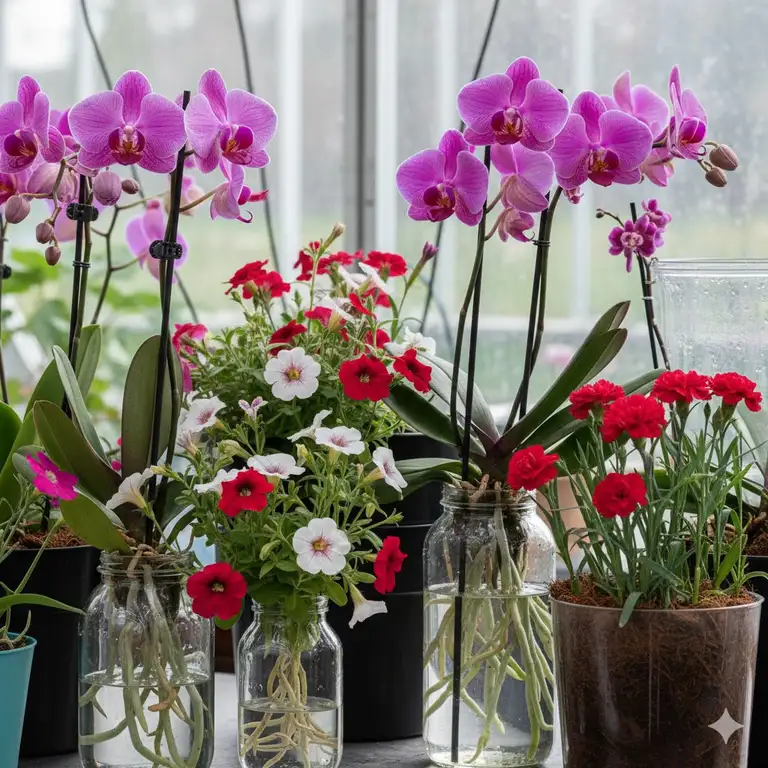
Ever look around your living room in the middle of winter and wish for a vibrant splash of color? Or maybe you’re just tired of the mud, pests, and guesswork of traditional soil gardening. If you’re dreaming of year-round petunias or a kitchen counter full of fresh marigolds, I’ve got two words for you: hydroponic flowers.
Growing flowers without soil might sound like science fiction, but it’s not only possible—it’s cleaner, faster, and often more efficient than gardening in the dirt. You get to play Mother Nature, providing the exact nutrients, light, and water your plants crave. The result? Stunning, healthy blooms that can brighten your home 365 days a year.
✨Was this helpful? Spread the word! 🚀
[addtoany]
But let’s be honest, the starting line can be confusing. What are the best flowers for hydroponics? What gear do you actually need? Don’t worry, I’ve done the digging (pun intended) for you. We’ll explore everything from the easiest beginner blooms to the exact systems, nutrients, and lights that will turn your thumb green—even if it’s never touched soil.
Before we dive into the specific products, let’s look at why growing flowers hydroponically is a game-changer compared to traditional soil.
Table 1: Hydroponics vs. Traditional Soil Gardening for Flowers
| Feature | 🌱 Hydroponics | 🌳 Traditional Soil Gardening |
| Growth Rate | Up to 25-50% faster. | Slower; dependent on soil quality and season. |
| Water Usage | Uses up to 90% less water (recirculating). | High water usage; significant loss to evaporation. |
| Pest & Disease | Drastically reduced; no soil-borne pests. | Constant battle with pests, fungi, and soil diseases. |
| Location | Anywhere indoors! (Apartment, basement, kitchen). | Outdoors only, or messy indoor pots. |
| Nutrient Control | 100% precise. You give plants exactly what they need. | Inconsistent; depends on soil composition and fertilizers. |
| Mess Factor | Virtually zero. No soil, no mud. | High. Dealing with bags of soil, dirt, and mud. |
Quick Comparison: Top 7 Picks for Your Hydroponic Flower Garden
Here’s a quick glance at the essential products we’re about to explore. These are the building blocks for a successful indoor garden, covering everything from all-in-one systems to the specialized “food” your flowers will need.
Table 2: Top 7 Essential Products for Hydroponic Flowers
| Product | Product Type | Best For… | Key Feature |
| AeroGarden Bounty Elite | All-in-One System | Beginners wanting maximum blooms with zero guesswork. | Automated lighting, nutrient reminders, and Wi-Fi control. |
| iDOO 12-Pod Indoor Herb Garden | All-in-One System | Budget-conscious beginners or smaller spaces. | Excellent value with a surprisingly strong 23W LED. |
| VIVOSUN 5-Gallon DWC System | DWC System Kit | DIYers and growers wanting to raise larger plants. | Simple, effective Deep Water Culture setup. |
| General Hydroponics Flora Series | 3-Part Nutrients | Growers who want complete control over the nutrient cycle. | The industry-standard 3-part nutrient solution. |
| Advanced Nutrients Big Bud | Bloom Booster | Maximizing the size and number of flowers. | Flower-specific formula high in Phosphorus (P) & Potassium (K). |
| MARS HYDRO TS 1000W LED | Grow Light | Dedicated growers needing serious light for a tent or shelf. | High-efficiency quantum board with dimming. |
| CANNA Coco Coir Bricks | Growing Medium | Ebb & Flow or Drip systems; provides excellent root support. | Sustainable, pH-stable, and disease-resistant. |
🏆 Top 7 Products for Growing the Best Flowers for Hydroponics: Expert Analysis
Finding the best flowers for hydroponics is only half the battle; you need the right hardware and nutrients to support them. I’ve tested and researched countless products, and these are the ones that consistently deliver results for flowering plants.
1. AeroGarden Bounty Elite
If you want the “set it and forget it” path to a stunning flower garden, this is it. The AeroGarden is the most recognized name in countertop hydroponics for a reason.
-
Detailed Specifications:
-
Type: Aeroponic System (a high-tech form of hydroponics)
-
Capacity: 9 plant pods
-
Light: 50W full-spectrum, dimmable LED with automated sunrise/sunset.
-
Controls: Full-color touchscreen; Wi-Fi and Alexa compatible.
-
Special Features: Motorized, extendable light (up to 24 inches), vacation mode, automated light/nutrient reminders.
-
- Customer Review Analysis:Users consistently rave about the ease of use. People who claim they “kill everything” are successfully growing vibrant petunias, lavender, and even small tomatoes. The automated reminders are a lifesaver. The main complaint? The price. It’s a premium product with a premium price tag. Some users also note the pump can be a bit louder than expected, but not obtrusively so.
-
Warranty: Typically a 1-year limited warranty from the manufacturer.
-
Pros & Cons Analysis:
-
✅ Pros:
-
Incredibly simple for beginners.
-
Powerful, dimmable 50W light is excellent for flowering.
-
High-tech features (Wi-Fi, touchscreen) actually make life easier.
-
The 24-inch extendable light arm gives tall flowers (like zinnias) plenty of room.
-
-
❌ Cons:
-
Premium price tag.
-
You are locked into their proprietary seed pods (unless you buy third-party sponges).
-
-
-
My Take: The AeroGarden Bounty Elite is the luxury sedan of indoor gardens. It’s perfect for anyone who values convenience and proven results over-cost and wants a beautiful, productive garden sitting right on their kitchen counter.
2. iDOO 12-Pod Indoor Herb Garden
This is the budget-friendly champion that gives the big brands a serious run for their money. It strips away the fancy Wi-Fi and touchscreen but keeps the core components you need for growing flowers hydroponically.
-
Detailed Specifications:
-
Type: DWC (Deep Water Culture) / Aeroponic hybrid
-
Capacity: 12 plant pods
-
Light: 23W full-spectrum LED
-
Controls: Simple button-press panel
-
Special Features: Built-in fan for air circulation (and pollination!), 4.5L water tank, extendable light (up to 11.3 inches).
-
- Customer Review Analysis:The overwhelming sentiment is value. Customers are shocked at what this little system can produce for its price. The built-in fan is a surprise hit, helping to strengthen stems and pollinate flowers. The main critique is the light height; at just over 11 inches, it’s not suitable for tall flowers. It’s best for shorter, bushier plants like petunias, pansies, or nasturtiums.
-
Warranty: Varies, but typically a 1-year warranty is provided.
-
Pros & Cons Analysis:
-
✅ Pros:
-
Fantastic price point.
-
12 pods offer more planting density.
-
Integrated fan is a smart feature for flower health.
-
Quiet pump.
-
-
❌ Cons:
-
Limited light height (11.3 inches) restricts plant choice.
-
The 23W light isn’t as powerful as the AeroGarden’s 50W.
-
-
-
My Take: If you want to try growing flowers hydroponically without a big investment, get the iDOO 12-Pod. It’s perfect for shorter flowers and herbs and provides an amazing introduction to the hobby.
3. General Hydroponics Flora Series (FloraGro, FloraBloom, FloraMicro)
You can’t talk about hydroponics without mentioning “GH Flora.” This is the legendary, three-part nutrient system that NASA uses. It gives you total control.
-
Detailed Specifications:
-
Type: 3-Part Liquid Nutrient
-
Components:
-
FloraGro (2-1-6 NPK): For structural and vegetative growth.
-
FloraBloom (0-5-4 NPK): For flower and fruit development (high P-K).
-
FloraMicro (5-0-1 NPK): Provides essential micro and trace minerals.
-
-
Formulation: Designed for all water types (hard and soft water versions available).
-
- Customer Review Analysis:This is the gold standard for a reason. Growers report robust growth, vibrant colors, and massive blooms. The key is control. By adjusting the ratios of the three bottles, you can “steer” your plants from leafy growth to a flower-focused frenzy. The learning curve is the only downside. Beginners are often intimidated, and you must have a pH meter to use this properly.
-
Warranty: Not applicable (consumable product).
-
Pros & Cons Analysis:
-
✅ Pros:
-
Unmatched control over your plant’s nutrition.
-
Proven, time-tested formula used by professionals.
-
Cost-effective in the long run, as it’s highly concentrated.
-
Suitable for any hydroponic system (DWC, NFT, AeroGarden, etc.).
-
-
❌ Cons:
-
Requires mixing three separate parts.
-
You absolutely must measure and adjust pH.
-
Can be intimidating for total beginners.
-
-
-
My Take: If you’re using an AeroGarden, stick with their pre-made nutrients. But if you have a DWC, NFT, or any other manual system, the General Hydroponics Flora Series is the best all-purpose nutrient you can buy. It’s what I use for my larger setups.
4. Advanced Nutrients Big Bud Liquid Fertilizer
Once your flowers start to form, you want to hit them with a “bloom booster.” This is the secret weapon for getting those huge, dense, and plentiful flowers.
-
Detailed Specifications:
-
Type: Bloom Booster (Nutrient Additive)
-
NPK: 0-1-3
-
Key Ingredients: High levels of Phosphorus (P) and Potassium (K), L-amino acids, citric acid.
-
Use: Added with your base nutrients during the flowering phase.
-
- Customer Review Analysis:The name says it all. Reviewers (especially those growing “valuable” flowers and cash crops) swear by it. They post photos of dramatically larger and more numerous blooms compared to using base nutrients alone. It’s potent. The main complaint is the cost—Advanced Nutrients is a top-shelf brand.
-
Warranty: Not applicable.
-
Pros & Cons Analysis:
-
✅ Pros:
-
Specifically engineered to maximize flower size and density.
-
Contains amino acids to help reduce plant stress.
-
Noticeable results, often within one flowering cycle.
-
-
❌ Cons:
-
Expensive.
-
It’s an additive, not a standalone nutrient. You still need a base like GH Flora.
-
-
-
My Take: You don’t need this to grow flowers. But if you’re looking for the absolute best flowers for hydroponics in terms of size and “wow” factor, a bloom booster like Advanced Nutrients Big Bud is a worthy investment.
5. MARS HYDRO TS 1000W LED Grow Light
The built-in lights on countertop gardens are great, but if you want to grow light-hungry flowers like miniature roses or a lot of zinnias, you need a dedicated grow light. This is my top pick for power and value.
-
Detailed Specifications:
-
Type: Quantum Board LED Grow Light
-
Power Draw: 150W (marketed as “1000W equivalent”)
-
Coverage: 2.5×2.5 ft (veg), 2×2 ft (flower)
-
Spectrum: Full-spectrum white, with added 660nm Red, 730nm IR.
-
Features: Dimmable driver, high-reflectivity aluminum hood, fanless (silent) design.
-
- Customer Review Analysis:This light gets praised for its intense brightness and excellent spectrum. Users report that the “sun-like” white light is easier on the eyes than the old purple “blurple” lights and that their plants respond with tight, bushy growth. The dimming function is a huge plus for starting seedlings or acclimating plants. The main negative is the heat; though fanless, the driver (power supply) gets quite warm to the touch.
-
Warranty: Typically a 3-5 year manufacturer warranty.
-
Pros & Cons Analysis:
-
✅ Pros:
-
Incredible light output (high PAR) for the price.
-
Excellent full-spectrum light for all growth stages.
-
Dimmable feature provides great control.
-
Completely silent operation.
-
-
❌ Cons:
-
Driver runs hot (can be mounted remotely).
-
Coverage is limited to a 2×2 ft square for flowering.
-
-
-
My Take: For a small grow tent or a dedicated shelving unit, the MARS HYDRO TS 1000W is a beast. It provides the high-intensity light that a flowering plant craves and will outperform any all-in-one system’s light.
6. VIVOSUN 5-Gallon DWC Hydroponic System
If you want to move beyond countertop gardens and grow a single, large flowering plant (like a hibiscus or a big rose bush), a DWC (Deep Water Culture) bucket is the way to go.
-
Detailed Specifications:
-
Type: Deep Water Culture (DWC) Kit
-
Capacity: 1 plant site per 5-gallon bucket
-
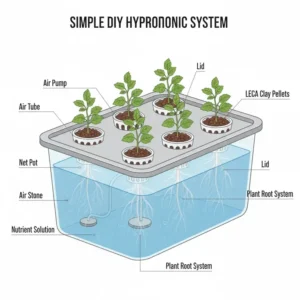
Includes: 5-gallon bucket, 6-inch net pot lid, air pump, air stone, tubing.
-
Assembly: Requires minimal assembly.
-
- Customer Review Analysis:This is a bare-bones, effective system. Customers love its simplicity and how it allows for massive root development. It’s a classic, proven method. Complaints are usually about the included air pump—it’s often described as weak or loud. Many users recommend upgrading the air pump and air stone for better results.
-
Warranty: Typically 1 year on components like the pump.
-
Pros & Cons Analysis:
-
✅ Pros:
-
Very inexpensive way to start with DWC.
-
Promotes explosive root growth.
-
Simple to understand, set up, and clean.
-
Ideal for growing one large “specimen” plant.
-
-
❌ Cons:
-
Included air pump is a common weak point.
-
You must provide your own nutrients, light, and pH kit.
-
Only holds one plant.
-
-
-
My Take: The VIVOSUN DWC System is the perfect “step 2” for a hobbyist. Pair this with the GH Flora nutrients and the MARS HYDRO light, and you have a professional-grade setup for growing truly impressive hydroponic flowers.
7. CANNA Coco Coir Bricks
What if you’re using a system that isn’t DWC or aeroponics? For Ebb and Flow or Drip systems, you need a substrate (growing medium). Coco coir is my absolute favorite.
-
Detailed Specifications:
-
Type: Growing Medium (Substrate)
-
Material: Dehydrated and compressed coconut husks.
-
Form: Comes in-stock, dehydrated bricks.
-
Features: Rinsed and buffered (low salt, stable pH), excellent water-holding capacity and aeration.
-
- Customer Review Analysis:Growers love coco coir for being a “best of both worlds” medium—it holds water like soil but drains like hydro, preventing root rot. CANNA is a premium brand, and users note it expands quickly, is very clean (free of pests/debris), and doesn’t compact. The only “hassle” is that you have to rehydrate and “buffer” it (soak in a Cal-Mag solution) before use.
-
Warranty: Not applicable.
-
Pros & Cons Analysis:
-
✅ Pros:
-
Sustainable and renewable resource.
-
Inert and pH stable (when buffered).
-
Incredible balance of water retention and aeration.
-
Resistant to pests and fungal growth.
-
-
❌ Cons:
-
Requires prep work (hydrating and buffering).
-
Dries out faster than soil.
-
-
-
My Take: If you’re building a system, CANNA Coco Coir is the professional’s choice for a substrate. It’s forgiving, clean, and provides an ideal environment for the roots of your flowers for hydroponics.
Table 3: System Feature Matrix (AeroGarden vs. iDOO vs. VIVOSUN)
| Feature | AeroGarden Bounty Elite | iDOO 12-Pod | VIVOSUN 5-Gallon DWC |
| System Type | Aeroponic | DWC/Aeroponic Hybrid | DWC |
| Plant Sites | 9 | 12 | 1 (large) |
| Light Included? | ✅ Yes (50W, Automated) | ✅ Yes (23W, Timed) | ❌ No |
| Pump Included? | ✅ Yes (Water Pump) | ✅ Yes (Water Pump) | ✅ Yes (Air Pump) |
| Ease of Use | ⭐️⭐️⭐️⭐️⭐️ (Easiest) | ⭐️⭐️⭐️⭐️ (Very Easy) | ⭐️⭐️ (Requires setup) |
| Best For… | Countertop convenience | Budget beginners | Large specimen plants |
Table 4: Nutrient & Light Comparison
| Product | Type | Key Spectrum/Ingredient | Dimmable? |
| GH Flora Series | Base Nutrient | Balanced N-P-K + Micros | N/A |
| Advanced Nutrients Big Bud | Bloom Booster | High P-K, Amino Acids | N/A |
| MARS HYDRO TS 1000W | Grow Light | Full Spectrum White + Red/IR | ✅ Yes |
| AeroGarden Light | Grow Light | 50W Full Spectrum | ✅ Yes |
| iDOO Light | Grow Light | 23W Full Spectrum | ❌ No |
✨ Ready to Start Your Hydroponic Flower Garden?
These are the tools that will take you from a brown-thumb beginner to a hydroponic pro. Click on any of the product names in the detailed review below to check current availability and dive deeper into what makes them the best!
💬 Just one click – help others make better buying decisions too!😊
[addtoany]
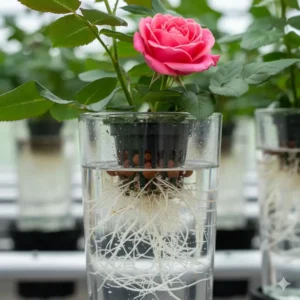
🌸 The Surprising Benefits of Growing Flowers Hydroponically
So, why go through all this trouble? Why not just use a pot of soil? I was a soil gardener for years, but once I saw the benefits of hydroponics for flowers, I was hooked.
-
🚀 Explosive Growth: Because the roots are bathed directly in a nutrient-rich solution, the plant doesn’t waste energy searching for food. All that energy goes into foliage and—you guessed it—flowers. I’ve seen petunias go from seed to full bloom in 6-8 weeks, something that takes much longer in my outdoor garden.
-
💧 Water Conservation: This one surprises people. A recirculating hydroponic system, like a DWC or NFT, uses up to 90% less water than soil gardening. The water isn’t lost to evaporation or runoff; it’s captured and reused.
-
🚫 No Pests, No Mess: This is my personal favorite. Say goodbye to soil-borne pests like fungus gnats, spider mites, and aphids. Say goodbye to dragging heavy, dirty bags of potting soil through your house. It’s a clean, controlled environment.
-
🗓️ A 365-Day Growing Season: Who cares if there’s a blizzard outside? With a good grow light, your hydroponic flower garden is an endless summer. This is the true joy of growing flowers hydroponically.
Table 5: Benefits vs. Traditional Soil Gardening (Quantified)
| Metric | 🌱 Hydroponics | 🌳 Traditional Soil |
| Avg. Time to Bloom | 30-50% faster | 100% (Baseline) |
| Typical Water Use | 1-2 Gallons (recirculated) | 10 Gallons (lost to runoff) |
| Pest Risk | Very Low | High |
| Location | Anywhere with power | Outdoors or sunny window |
🌷 A Hydroponic Flowers List: What Are the Best Flowers to Grow?
Okay, let’s get to the fun part. While you can technically grow almost anything hydroponically, some plants are just plain easier and more rewarding. This hydroponic flowers list is divided into beginner-friendly and more advanced options.
Easy Flowers for Hydroponics (Beginner-Friendly)
These are the “workhorses” that are forgiving, grow fast, and aren’t too fussy about conditions. They are some of the best hydroponic flowers to start with.
- Marigolds: 🧡These are probably the easiest flower you can grow. They sprout quickly, are naturally pest-resistant, and their bright orange and yellow blooms are a wonderful splash of color. They do great in any system, from an AeroGarden to a DWC bucket.
- Petunias: 💜Want a cascade of purple, pink, or white flowers? Petunias are your answer. They love hydroponics and will bush out and produce an unbelievable number of blooms. They are a perfect fit for countertop systems where they can trail over the sides.
- Zinnias: 💖If you want a classic “cut flower” look, go for zinnias. They come in a rainbow of colors and are very light-hungry. Give them a strong light (like the MARS HYDRO), and they will reward you with thick, sturdy stems and large, beautiful blooms.
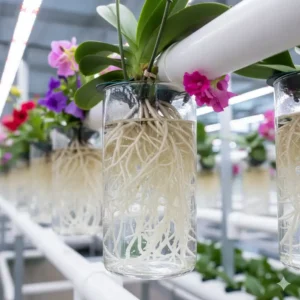
- Peace Lilies: 🤍Wait, a houseplant? Yes! The Peace Lily is one of the few plants that can grow with its roots directly in water, making it a perfect (and beautiful) candidate for a simple DWC. While it’s known for its green leaves, its white spathe “flower” is elegant and it’s one of the best air-purifying plants you can grow.
Intermediate Flowers for Hydroponics
These take a bit more finesse. They might be pickier about pH, nutrient strength, or require pruning, but the payoff is huge.
- Miniature Roses: 🌹Yes, you can grow roses hydroponically! Miniature varieties are the best bet. They are heavy feeders and will require a strong bloom-boosting nutrient (like Advanced Nutrients Big Bud) and very intense light. You also need to manage your pH and EC levels carefully.
- Lavender: 🪻Growing lavender indoors is a dream for many. It can be done, but it’s tricky. Lavender hates “wet feet,” so a DWC system is a bad idea. An Ebb and Flow system with a well-draining substrate like LECA or coco coir is a much better choice. It also demands extremely high light.
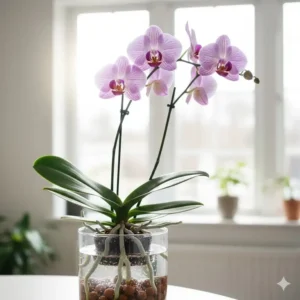
- Orchids (Phalaenopsis): 🌸This is a fun one. Many commercial orchids are already grown hydroponically! Instead of bark, they are grown in a substrate like LECA (those clay pebbles). They require very weak, specialized nutrients and a careful wet-dry cycle.
Table 6: Flower Compatibility by Hydroponic System
| Flower | Best System(s) | Light Needs | Difficulty |
| Marigolds | AeroGarden, DWC, NFT | Medium-High | ⭐️ (Very Easy) |
| Petunias | AeroGarden, iDOO, NFT | High | ⭐️ (Very Easy) |
| Zinnias | DWC, Ebb & Flow | Very High | ⭐️⭐️ (Easy) |
| Peace Lily | Simple DWC (Kratky) | Low-Medium | ⭐️ (Very Easy) |
| Mini Roses | DWC, Ebb & Flow | Extremely High | ⭐️⭐️⭐️⭐️ (Hard) |
| Lavender | Ebb & Flow, Drip | Extremely High | ⭐️⭐️⭐️⭐️ (Hard) |
🛠️ How to Get Started: Your Guide to Growing Flowers Hydroponically
Alright, you’ve got your gear and your seeds. Let’s put it all together. This is the basic flow for getting your garden up and running.
Step 1: Choose Your System (The “Pot”)
We’ve discussed the products, but here’s a quick-and-dirty breakdown of the methods.
-
Deep Water Culture (DWC): Easiest manual method. Roots hang from a net pot into a bucket of aerated nutrient solution (like the VIVOSUN kit). Great for larger plants.
-
Aeroponics: Roots are misted with nutrients (like the AeroGarden). Fastest growth, but relies on pumps and timers.
-
Ebb and Flow (Flood and Drain): A tray of plants in a substrate (like CANNA Coco Coir) is periodically flooded with nutrients, which then drains back to a reservoir. A fantastic, stable method.
Table 7: System Comparison: Pros & Cons
| System | Pros | Cons |
| DWC | Simple, cheap, great root growth. | Relies on an air pump; root rot if pump fails. |
| Aeroponics | Fastest growth, very clean. | Most expensive; pump/mister failure is critical. |
| Ebb & Flow | Very stable root environment. | More complex (pump, timer, plumbing). |
Step 2: The Importance of Light (It’s Everything for Flowers)
This is the #1 mistake I see. You cannot grow good flowers with a weak desk lamp or a dim window. Flowers are light-hungry.
-
Spectrum: You need a full-spectrum light. This mimics the sun. The old purple (blue/red) lights work, but modern white LEDs (like on the MARS HYDRO) are more efficient and pleasant to live with. Red light, in particular, is critical for triggering the flowering response.
-
Intensity: This is where countertop systems can fail. A petunia will be happy under an AeroGarden light, but a mini rose will survive. To make it thrive, it needs the intensity of a dedicated grow light.
-
Duration: Most flowering plants need 12-16 hours of light per day. You must use a timer.
Step 3: Nutrients & Water Quality (The “Food”)
This is the core of hydroponics for flowers.
-
Nutrients: You cannot use Miracle-Gro. You need hydroponic-specific nutrients. A 3-part system like the GH Flora Series is perfect. You start with a “vegetative” ratio (more “Gro”) and switch to a “flowering” ratio (more “Bloom”).
-
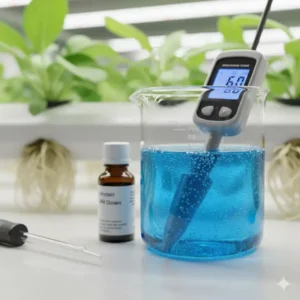
pH: This is non-negotiable. You MUST own a pH testing kit or meter. Hydroponic nutrients are only available to the plant in a specific pH range, typically 5.5 to 6.5. If your pH drifts outside this, your plants will starve, even if they are swimming in food.
-
EC: This stands for Electrical Conductivity. It’s a measure of the total amount of nutrients (salt) in your water. As plants eat, the EC drops. As water evaporates, EC rises. A simple EC meter helps you know exactly when to add more nutrients or water.
Table 8: Hydroponic Nutrient Schedule (Simplified Example)
| Growth Stage | Week | FloraGro (per Gal) | FloraMicro (per Gal) | FloraBloom (per Gal) | Target pH |
| Seedling | 1-2 | 2.5 ml | 2.5 ml | 2.5 ml | 5.5 – 6.0 |
| Vegetative | 3-4 | 7.5 ml | 5 ml | 2.5 ml | 5.8 – 6.2 |
| Flowering | 5-8+ | 2.5 ml | 5 ml | 7.5 ml | 6.0 – 6.5 |
| (Note: This is just an example. Always follow the manufacturer’s feeding chart.) |
Step 4: Pollination (The Forgotten Step!)
Outdoors, bees and wind do this for you. Indoors? That’s your job. If your flowers aren’t producing (or your tomatoes aren’t setting fruit), it’s likely a lack of pollination.
For most flowers, it’s easy. Just take a small, soft paintbrush, a Q-tip, or even your finger and gently swirl it around the center of each flower, moving from bloom to bloom. This transfers the pollen. A small fan (like the one on the iDOO) also helps!
🧑⚕️ Troubleshooting Your Hydroponic Flower Garden
Even with the best flowers for hydroponics, problems can pop up. Here’s a quick guide.
-
Problem: Yellowing leaves.
-
Cause: Usually a nutrient or pH issue. If the whole leaf is yellow (starting from the bottom), it’s likely a Nitrogen deficiency. If it’s yellow between the veins, it could be a micronutrient (like Iron or Magnesium) locked out by high pH.
-
Fix: Check your pH first! Get it back to 5.8-6.2. If pH is fine, check your nutrient (EC) level.
-
-
Problem: Brown, slimy roots.
-
Cause: Root Rot (Pythium). This is the #1 killer in DWC. It’s caused by a lack of oxygen and/or water that’s too warm (above 72°F / 22°C).
-
Fix: Increase aeration (get a bigger air stone). Add a beneficial bacteria supplement (like Hydroguard) to your water. If it’s bad, you may have to clean the whole system with peroxide.
-
-
Problem: Tall, “leggy” stems.
-
Cause: Not enough light. The plant is desperately stretching to find the sun.
-
Fix: Move your light closer to the plant (be careful not to burn it) or buy a more powerful light.
-
-
Problem: Lots of leaves, but no blooms.
-
Cause: Three main possibilities:
-
Wrong Nutrients: Too much Nitrogen (“Gro”) and not enough Phosphorus/Potassium (“Bloom”).
-
Not Enough Light: The plant doesn’t have the energy to produce flowers.
-
Light Cycle: Some plants are “photoperiod” sensitive, meaning they need a specific number of dark hours to trigger flowering. (Most common annuals don’t, but be aware).
-
-
Fix: Switch to your “bloom” nutrient formula. Ensure your light is intense and running for 12-16 hours a day.
-
For more in-depth information on plant nutrients, the Wikipedia page on Plant Nutrition is a fantastic, high-authority resource. Similarly, Cornell University’s Controlled Environment Agriculture program offers excellent research on hydroponics.
🌿 Find Your Perfect Flower Seeds!
Now that you know what to grow, the fun begins! Check out the huge variety of flower seeds available online. Look for “dwarf” or “miniature” varieties of your favorites—they are often the best suited for indoor hydroponic systems. Find your seeds today and get growing! 🌼
🏁 Conclusion: Your Home, Your Flower Oasis
Growing the best flowers for hydroponics isn’t some far-off dream—it’s something you can start this weekend. It’s a hobby that is clean, rewarding, and brings life and color into your home, no matter the season.
We’ve covered it all, from the dead-simple (Marigolds in an iDOO system) to the more advanced (Miniature Roses in a VIVOSUN DWC bucket). We’ve seen that with the right tools—like a powerful MARS HYDRO light and precision nutrients like the GH Flora Series—you can become the master of your own indoor garden.
The key is to just start. Pick a system, pick an easy flower, and give it a try. You’ll be shocked at how fast you can go from an empty countertop to a vibrant, blooming garden.
FAQs
❓ What are the best hydroponic systems for flowers?
❓ What nutrients do I need for hydroponic flowers?
❓ Can you grow roses hydroponically?
❓ Why are my hydroponic flowers not blooming?
❓ Is growing flowers hydroponically expensive?
Recommended for You
- Hydroponic Flowers: 7 Amazing Kits for a Stunning 2025 Bloom
- Aeroponics Systems for Sale: 7 Top Picks 2025 for Faster, Healthier Plant Growth
- Aeroponics Kit: 7 Best Systems for 2025 Success
Disclaimer: This article contains affiliate links. If you purchase products through these links, we may earn a small commission at no additional cost to you.
✨ Found this helpful? Share it with your friends! 💬🤗
[addtoany]
